J.B. Priestley has a very interesting approach. Since that he discusses time in general fashion as to related to mankind, hence “Man and Time“, as he calls his elucubrations, is for everybody and at the end of the day, time only exists in the mind of men, specifically each man, or One man, and I quote:
J. B. Priestley
The “one man” in the preceding chapter heading is of course myself. Who else could it be ? And this is not egoism. Let me quote what I said in the Introduction :
But what is more important is that toward the end of this account of Man and Time any attempt at an objective manner would be impossible. The material offered will be itself deeply subjective, belonging to one man s inner world of thoughts, feelings, intuitive ideas, vague impressions, belonging in fact to my own personal encounter with Time. This seems to me the only possible conclusion to such a book…
So far I have done what I could to follow and to consider Time in the outer world—though it would be more accurate to say that my subject really consisted of Time effects. But in the end Time must be tracked down in the inner world, and the only inner world I really know is my own. I repeat, then, this is not egoism. To relate myself to Time is the only sensible and honest way in which to end this book. But I do it in the hope that what I discover in my mind many other people will discover in theirs. It is one of the peculiarities of Time that it is intensely private and yet also widely shared.
That said, I will post his personal time experience and that of St. Augustine. Before I do that, I will indicate for those more more acculturated souls, how the intelligentsia see the problem and which is reflected in the Stanford Encyclopedia of Philosophy and which can be seen at:
Various interpretations of the meaning of the picture have been offered: the conflict between youth and old age, time as the devourer of all things, the wrath of Godand an allegory of the situation in Spain, where the fatherland consumed its own children in wars and revolution.
One interesting thing is that Priestley although using the notions of the ancient Greeks, he does not comment their three concepts to represent time: khrónos, kairós and aion, which means:
Khrónos is chronological time, physical time, which can be measured, with a beginning and an end. Chronos is time as we know it: the time that passes, the time that is counted, the time that is money. At the risk of stating the obvious, we find it at the root of chronometer, chronological, and many other words in which it evokes that specific meaning of time that passes. It is tempo in music, takt in lean manufacturing, pace in moving forward. It is often represented with a scythe to remind us that time is short. In medieval iconography, in addition to the scythe, Chronos holds an hourglass, after its invention by French monk Liutprand in the 8th century AD. In running innovation projects, Chronos is the time we consider when scheduling activities, setting deadlines, drawing Gantt charts, striving to shorten time-to-market.
Kairós is an indeterminate time, it is the metaphysical time in which something special happens, it is the time marked with a “before” and an “after”. Kairos is the opportune moment, the right time to do something. In project management, Kairos is the sense of timing we must develop in order to launch at the moment when we are going to meet the least resistance to change or the greatest demand pull. But the opportune moment is a fleeting one. That is why Kairos is the only time deity to have wings: one instant he’s here, the next he’s gone.
Aion was sacred and eternal time, it is cyclical and immeasurable time. Aion is the epoch, the age that we refer to in stone age, bronze age, age of Pericles, age of cathedrals, age of discoveries, age of enlightenment, atomic age. Etymologically, we find it in a little-used word: eon, the major unit of geologic time, usually subdivided into eras. In antique iconography, Aion is often represented holding a big circle to illustrate not that time is cyclical but that ages go through a lifecycle: in the bronze age, for instance, a new metal-working technology emerges,
Priestley does not mention as such, you’ll not find Kairos or Aion, in his book, only Khronos above, although he reveals that he uses in his plays time divided into three formats, or:
There is one for passing time;
there is another for the first kind of experience, the contemplative slower-up;
there is another for the second kind of experience, the purposeful, imaginative, creative speeder-up: three times.
Which although not exactly the same, they have correlation.
Priestley goes on: So far I have done what I could to follow and to consider Time in the outer world—though it would be more accurate to say that my subject really consisted of Time effects. But in the end Time must be tracked down in the inner world, and the only inner world I really know is my own. I repeat, then, this is not egoism. To relate myself to Time is the only sensible and honest way in which to end this book. But I do it in the hope that what I discover in my mind many other people will discover in theirs. It is one of the peculiarities of Time that it is intensely private and yet also widely shared. We could put it like this: that superficially, in the world of clocks and watches and appointments, we share Time; then, on a deeper level, it seems intensely private; and then, on a still deeper level, per haps we begin to share it again, in ways we cannot yet fully understand.
However, before I begin to relate myself to Time, there is a moral challenge that must be met, an ethical obstacle that must be cleared away.
little boyCommutersvacationers on deck chairEmbracing couple
We all share the time of watches and clocks; yet the passing of time is an individual thing, different in each situation. For the little boy or the hurried commuter, time may seem to move painfully slowly; for the vacationers in their deck chairs or the embracing couple, time is perhaps almost standing still.
This challenge can be heard in a pronouncement by a distinguished colleague of mine, who often expresses scientific opinion. He mistrusted and disliked theories of Time, he declared, because they appeared to him ”a mode of denying the seriousness of the moment.” And here he seems to me wrong-and dangerously wrong. To begin with, the picture he has in the back of his mind, of so many Time theorists dreamily ignoring the passing of the hours is quite false. The Time theorists I have known have been exceptionally energetic and active-minded per sons. They are high above and not below the average. Nor is it difficult to see why this should be so. It is their Time theories that encourage them to appreciate ”the seriousness of the moment.” It is their rejection of the conven tional idea of Time that helps to give them energy and to keep them active-minded.
Death and the Maiden by Hans Baldung 1476-1545The Triumph of Death by Pieter Brueghel 1529-1569
The inevitability of death may haunt all men at some time, but it is perhaps especially fearful to those who believe themselves wholly contained in passing time
Unlike the majority of people nowadays, the Time theorist does not believe that moments flash into our consciousness and then vanish for ever. These moments make up our lives, and it is possible, indeed probable, that we do not deposit what is left of our lives into the grave, all consciousness leaving us for ever during the last moment. If we are not hurrying toward oblivion, if we are shaping a self that will survive death in some form or other, then our existence in passing time, moment by moment, does not become less important but more important. It is the very idea of multiple Time, with each moment existing not only in length but in depth, that brings with it seriousness and a sense of responsibility and I for one wish to Heaven I had lived with this thought every day of my life.
Nobody can deny that this present age has some extremely ugly features. It has offered us a wide range of nastiness and horror, from dictators ordering millions of innocents into starvation labor camps or gas ovens to teenage city lads amusing themselves by kicking old men to death. After despoiling and half-ruining the planet, it has had two world wars and now has plans for a third that would be a man-made Doomsday. Its techniques of mass persuasion are turning men into sheep. And 20th century urban man is the greatest time waster and time killer this earth has ever known and in all this global corruption, time theorists have played no part at all.
But this is not true of the ordinary Time view, the feeling that in the end all our moments add up to nothing, the conviction that our existence is meaningless. It is these that deny “the seriousness of the moment” The moment does not matter because it is only another little step toward final oblivion. No longer is there a Heaven to be won or lost, a Hell to be condemned to; there is nothing . It is all a tale told by an idiot.Time is hustling us along to the big sleep.
Capuchin Mummies crumbling away at Palermo, Sicily. Just as death obliterates all life’s outward forms, so many of us believe that death – the end of our allotment of passing time – brings oblivion to all consciousness. but such a belief implies that life is meaningless.
But what if Time is not as simple as most people now imagine it to be? What if some of the theorists are right? The prospect changes at once though not all its shades are softer, not all its coloring more harmonious. Suppose we are sentenced not to death, to sleep and forgetting, but to life, to keep on living with ourselves, with what we have been, what we have done? Suppose when we die we rid ourselves only of the world’s time, tomorrow’s date, but do not escape from our own time and what we have made of it? Feeling sure of oblivion, the suicides put pistols to their heads or ampoules of cyanide between their teeth, to obliterate all consequences of their wickedness or folly; but what if they should find themselves still existing, now without benefit of bullet or poison and with every consequence still to be faced? What if a man goes yawning on, losing all curiosity and zest and feeling, just waiting to go, to sleep for ever, and then discovers after death that he is still awake, still conscious, in a boredom more gigantic and stifling than ever? What if the people who have filled their lives with suspicion and hatred leave only their bodies in the churchyard, their minds then going wandering through a hell they have created for themselves?
Such things may happen or they may not: Nobody knows. As a Time theorist I think the odds are in favor of something o the sort happening, just because I believe that our consciousness does not entirely exist within passing time and that death does not bring complete oblivion. But the point I wish to make here is that it is utterly unreasonable to accuse Time theories of “denying the seriousness of the moment.” They not only do not deny that seriousness, they sharply increase our sense of it: They give the moment depth and significance.
One of my BBC correspondents – the only one out of a thousand or more – took a Freudian view of my concern with Time. (He called it Freudian himself.) He said it was born from an unconscious fear of death. Well, I have never claimed to be an heroic figure, and I certainly share the general apprehension of physical catastrophes – high bridges collapsing, airplanes bursting into flames, head-on crashes of cars, and the rest. On the other hand, having been close to death on several occasions, I have experienced that extraordinary sense of detachment, with events going into slow motion, which seems to suggest that part of our being exists in another kind of Time.
(Priestley served in the British army during theFirst World War, volunteering for the Duke of Wellington’s Regiment on 7 September 1914 and being posted to the 10th Battalion in France as a Lance-Corporal on 26 August 1915. He was badly wounded in June 1916 when he was buried alive by a trench mortar. He spent many months in military hospitals and convalescent establishments and on 26 January 1918 was commissioned as an officer in the Devonshire Regiment and posted back to France in the late summer. As he describes in his literary reminiscences, Margin Released, he suffered from the effects of poison gas and then supervised German prisoners of war before being demobilised in early 1919.)
And I certainly do not share the notion, common throughout a large area of our civilization, that it is ill-mannered and morbid to mention death at all. I feel that many people now are haunted by a curious combined fear of life-and-death, secretly wishing both of them to be scaled down and drained of all color. As Nicoll writes in Living time:
The difficulty is that people do not want to think, to arouse themselves. Even when we are discontented with life we do not want to make the effort of thinking of finding new outlooks. A man wants momentary enjoyment; he does no want to be disturbed; he prefers to cling to the opinions he has, and to make everything as easy as possible for himself… Most of slook for rest at death or annihilation How often does the physician hear the dying say: I want only rest, oblivion – even among those who have held the strongest religious opinions…”
“This is only to be expected, of course, when a man is weary of struggling against pain and weakness fighting a battle he feels he must lose. But often long before the last sickbed is reached, there is this longing for rest and oblivion. Once youth has gone, people too often find a mechanical existence, with all its meaningless pursuits, more trouble than it is worth. This helps to explain their irritation, their angry comments, when any new theory of Time comes their way. Time the great annihilator must not be challenged. They feel it must be left alone to do its work on them These people do not want any more life; they feel they have had more than enough already.
I hope the reader will now agree with me that whatever Time theories may be, they are most certainly not “a mode of denying the seriousness of the moment.” A wide reading of books and correspondence has convinced me that Time theorists are just as likely to disagree as to agree with one another. But I think they share two convictions. One is that the moment is more serious than most people imagine it to be. The other is that the conventional idea of Time, limiting and enslaving us to passing time is not only wrong but evil in its power to corrupt us.
Once them mind is freed it likes to strike out for itself, so that I know even now that I’m not likely to impose upon many readers my own particular view of Time, just because they will soon have views of their own; but if I have helped to liberate them from this bad idea, still dominating our age, I shall not have written in vain. But in order to approach my own particular view of time, I must offer a little personal history.
Where you are going to spend the rest of your life?The very old may welcome it
Not all of us fear the approach of death. The very old and sick may welcome it, as may others for other reasons. Such people seldom want to face questions about eternity; it is oblivion they seek.
Priestley framed above in this introduction the main points of his conjecture: The modern tendency to privilege science as a way of seeing and understanding reality has created a condition that prevents us from seeing the seriousness of the moment, once there is no past and future, only the present moment. Along with this, the death of God in the way that Nietezsche foresaw, condemns us to live a fable told by an idiot and time is only hustling us to the big sleep, when our conscience disappears and we disappear together.
He strongly condemns this and goes on telling his existential experience since his early childhood and his passage through life as an argument. As it gets a little long, I invite those interested to complete the reading above with the part that I didn’t post and that can be seen in his life story under his own account. If you prefer a shorter version, go to Wikipedia at J B Priestley
RE Campos
One Man St. Augustine and Time
AUGUSTINE ON TIME: HUMAN TIME, DIVINE ETERNITY, AND WHY THE FORMER IS REALLY THE LATTER
Mark Albert SelzerApp
Generally speaking, time is either conceived of cosmologically or phenomenologically. A cosmological conception of time views time as physical measurements based upon physical motions. Time, in this sense, is measured by a relation of successive events, that is, in a continuum in which events are organized in a before/after dichotomy. On the other hand, a phenomenological conception of time views time as a human experience, and is therefore concerned with how we experience time as humans. At any rate, our focus will be twofold. We will look at both Saint Augustine’s phenomenological conception of time and his rejection of any cosmological conception of time whatsoever.
In Book XI, of his Confessions, Augustine inquires into the nature of the human experience of time, or phenomenological time. Augustine arrives at revolutionary conclusions on the nature of phenomenological time in the course of his inquiry. In this essay, I will set forth the findings of Augustine’s inquiry. In this setting forth, I will show that phenomenological time differs from the divine eternity since phenomenological time was created, while the divine eternity has always existed. I will present two arguments on the nature of time followed by Augustine’s reasoned rejections of those arguments. These arguments are:
1 – The argument for time as the movement of heavenly bodies and
2 – The argument for time as long periods that are reducible to shorter ones.
Furthermore, I will explain Augustine’s argument which states that neither the past nor future exists, but that only the present exists in three forms:
1 – the present of past things
2 – the present of future things, and
3 – the present of present things.
Some may ask, “What was God doing before he made heaven and earth?” (Augustine 261). They say that if God was at rest, doing nothing, before he made heaven and earth, then his will to create something which he had not previously created is a new will, and therefore, he is not truly eternal because that which is eternal is neither new nor old but everlasting (Augustine 261). To Augustine, such people’s conceptions of time are mistaken because they confuse how we experience time with the divine eternity (262). To understand how this confusion occurs, we must make clear how phenomenological time differs from the divine eternity.
Beginning with the premises:
(P1) ‘God created time’ and
(P2) ‘time cannot exist,
and thereby elapse, until it has been created’, Augustine concludes that
(C) ‘time did not exist until God created it’.
Since there was no time before the creation of time, it is nonsensical to ask what God was doing ‘then’ because there was no then! Furthermore, although God precedes time, he does not precede time in time. Rather, it is in the divine eternity, “which is supreme over time because it is a never-ending present,” that God exists (Augustine 263). Since the divine eternity is “a never-ending present,” it exists wholly separate from time. Augustine makes this clear, “You [God] made all time; you are before all time; and the ‘time’, if such we may call it, when there was no time was not time at all” (Augustine 263).
However, we must now sufficiently explainhow we experience time, so that we may understand how it differs from the divine eternity. Stated as simply as possible, we understand phenomenological time as such through change. This is clearly evident in all sorts of empirical examples. One such example is that we determine the length of a day by observing the changing position of the sun. Thus, time differs from the divinity eternity because time is based upon change while the divine eternity is unchanging. Augustine states this nicely, “And no time is co-eternal with you, because you never change; whereas, if time never changed, it would not be time” (Augustine 263).
After making this distinction between the divine eternity and time, Augustine inquires into the nature of time, “What, then, is time?” (Augustine 264). This inquiry is complex and leads Augustine to consider, and ultimately reject, three arguments on the nature of time.
The first argument is that time is the movement of heavenly bodies.
This is similar to Aristotle’s understanding of time as “the number or measure of motion.” Augustine does a good job of expounding this argument, “There are stars and other lights in the sky, set there to be portents, and be the measures of time, to mark out the day and the year” (Augustine 271). It is no difficult task for Augustine to undermine this argument. Augustine simply asks, “If all the lights of the sky ceased to move but the potter’s wheel continued to turn, would there not still be time by which we could measure its rotations?” (Augustine 271). Obviously, Augustine suggests here that time can be measured through the motion of bodies other than those of the heavens. However, Augustine questions, more fundamentally, whether time can be measured through the motion of any bodies whatsoever, “Since, then, a day is completed by the movement of the sun through its total orbit, from the time when it rises in the east until it again reaches the east, my question is whether a day is that movement itself, the time needed for its completion, or a combination of both” (Augustine 271). Augustine concludes that neither of these are the case. If a day is the movement of the sun within a complete circuit, then the time it took to make that circuit would be irrelevant, since the measure of the day is based solely upon movement. Furthermore, if a day is the time needed for the sun to complete its circuit, then a circuit completed in one hour would not be a day. Rather, a day would be twenty-four circuits of the sun. In addition, if both the movement of the sun and the time needed to complete its circuit make up a day, then a day would be impossible if the sun completed its circuit in an hour or if the sun stood still while a time passed equal to its regular twenty-four circuit (Augustine 271-272). Moreover, Augustine argues that time is always understood relative to a standard. He illustrates this with a thought experiment:
If it [the sun] travelled around the earth in a space of time equal to twelve hours, we should say that it had completed its course in half the usual time. By comparing the two times, we should say that, if twelve hours were taken as a single period [i.e. a standard], twenty-four hours was a double period, and this calculation would hold good whether the sun completed its circuit from the east round to the east again in the single or the double period on different occasions (Augustine 272).
Since time is relative to a standard and these arguments on the nature of time seem to be contrary to how we experience time, Augustine dismisses any notion of time as the movement of material bodies.
Another argument is thattime is long periods that can be reduced to shorter ones. Augustine notes that this is how we measure the length of a poem:
We use the same method when we measure the length of a poem by the lengths of the lines, the lengths of the lines by the lengths of the feet, the lengths of the feet by the lengths of the syllables, and the lengths of the long syllables by the lengths of the short ones. We do not measure them by pages – that would give us a measurement in terms of space, not time – but by the pronunciation as they are read (Augustine 274).
However, Augustine also notes that a short line said slowly can take more time to utter than a long line said quickly (Augustine 274). Thus, Augustine rejects this argument.
After rejecting these two common arguments on the nature of time, Augustine argues that past, present and future are, in fact, illusory. Furthermore, he argues that there are but three presents:
1- the present of past things (memory),
2 – the present of future things (expectation), and
3 – the present of present things (perception).
He is led to this argument when he asks how we can say anything about the past or the future, when the past no longer exists and the future is yet to exist. Augustine, in hopes of locating when we experience the present, elucidates a phenomenological description of time. He begins by asking if we experience the present as the current century, but notes that we can further pinpoint the time which we are experiencing as present to a single year, which can be further pinpointed to a month, then a week, then a day, then hours, then minutes, then seconds, then fractions of seconds and so forth. He then concludes that we will eventually reach a point that is immeasurable, that is, of no duration. This point is simply an instant, and is when we experience the present. Unlike the past and the future, the present exists. (Augustine 264-265).
As noted earlier, we cannot experience the past as past or the future as future, because the past no longer exists and the future has yet to exist. This leads Augustine to conclude that past, present and future are all experienced in the instant just described, that is, in the present, since the present is the only time that exists. So, the past is present as memory. That which we remember has left an impression on our memory by means of conscious experience, and can be recalled unless we have forgotten it. Moreover, we can remember the order by which memories have been formed. Thus, when something happened long ago it is a relatively old memory. Of course, memories are recalled in the present and thereby allow the “past” to exist in the present. Furthermore, the present is present as perception, which includes all of our conscious experience. Likewise, the future exists in the present as expectation. Examples of this are abound: we think before we act (at least for the most part), we see the light of dawn quickly sweep across the earth and therefore expect the sun to rise soon, etc. At any rate, when something is far into the future, it is something that we do not expect for a great amount of time (relative to a standard, of course) (Augustine 265-268).
Through this phenomenological description, we conclude that there is only a continuous, unceasing present which is distorted by our experiences of memory and expectation. Earlier, we distinguished human time from the divine eternity on the grounds that human time changes as it progresses from future, to present and to past, while the divine eternity is an eternal and unchanging present. However, Augustine’s phenomenological description shows that, fundamentally, human time is also an eternal present. At any rate, Augustine refers to the distortion of the fundamental nature of human time as an eternal present as distentio, which is Latin for “distention.” He further says that our experience of time is distended in a two-fold way. We are pulled into the past by our memories and extended into the future by our expectations, which thereby distracts us from the reality of the eternal present that is, most fundamentally, our experience of time. As concluded earlier, the divine eternity is “a never-ending present.” Therefore, we can experience the divine eternity if we simply ignore the distractions of our memories and expectations. Now, we must ask ourselves: can we ignore those distractions?
Work Cited
Augustine.Confessions. Trans. R. S. Pine-Coffin. New York: Penguin Group (USA), Incorporated, 1970.
Friedrich Nietzsche (1844–1900) was a German philosopher and cultural critic who published intensively in the 1870s and 1880s. He is famous for uncompromising criticisms of traditional European morality and religion, as well as of conventional philosophical ideas and social and political pieties associated with modernity. Many of these criticisms rely on psychological diagnoses that expose false consciousness infecting people’s received ideas; for that reason, he is often associated with a group of late modern thinkers (including Marx and Freud) who advanced a “hermeneutics of suspicion” against traditional values (see Foucault [1964] 1990, Ricoeur [1965] 1970, Leiter 2004). Nietzsche also used his psychological analyses to support original theories about the nature of the self and provocative proposals suggesting new values that he thought would promote cultural renewal and improve social and psychological life by comparison to life under the traditional values he criticized.
I will reshuffle and arrange perhaps differently the sources I used and I will introduce clarifications that seem to me relevant and help readers to understand this subject that is quite complicated and difficult to figure out.
One of such observations is that Nietzsche, as the philosopher Paul Ricoeurfamously put it, is one of the three great “masters of suspicion” (the others being Marx and Freud).
Perhaps in a dialectical format, a broader view of him can be obtained from this report, with an interview where he places himself, especially in relation to various controversial contexts that involve him:
The priest-in-charge at St Mary’s, Newington talks about losing his way and finding it again.
Ten years ago this month, Rev Giles Fraser dramatically resigned from his ‘dream job’ as canon of St Paul’s Cathedral. His headline-making decision was prompted by the governing body’s vote to forcibly remove the anti-capitalist Occupy protesters camped in the square around the iconic building.
Fraser resigned as canon of St Paul’s Cathedral when anti-capitalist Occupy protesters were forcibly removed from outside the building in 2011
With a regular column in The Guardian (appropriately titled ‘Loose Canon’) and as a frequent voice on radio and TV, Fraser was already one of the country’s most recognisable religious figures. Yet, once the media furore came to an end, the priest found himself slipping into a personal crisis. Unsure of where to go next, he began drinking too much, his marriage broke down and he even contemplated suicide.
Fraser’s recent bookChosen: Lost and found between Christianity and Judaism (Allen Lane) charts how he found healing by reconnecting with the Jewish roots of his family tree. In a dialogue with Jewish scholar Amy-Jill Levine for The Big Conversation from Unbelievable?, Fraser says the journey has helped him learn to “live in the tension” between the two. A Christian priest who believes Jesus is the Son of God, now married to a Jewish woman, with children being raised in both traditions.
When I speak to him about the last decade, Fraser acknowledges that much has changed. He is still a regular media contributor but his current pastorate – St Mary’s, Newington, in one of the most multicultural parts of south London – is very different to St Paul’s. He appreciates the more grounded reality of parish life – “fixing the organ” and “picking up drug needles outside the church”. Likewise his politics has shifted. Having once been a darling of the left, Fraser now finds himself left cold by the rise of ‘woke’ ideologies that he believes are divorced from the realities of poor communities.
What hasn’t changed is Fraser’s high Anglican churchmanship. He’s never felt comfortable being “too chummy” with the divine, preferring to access God through the mystery of liturgy and the Eucharist. He’s also been openly critical of the Archbishop of Canterbury’s strategy for church growth, which Fraser (along with a vocal contingent of Anglicans) believes is leaving the traditional parish model to wither.
That doesn’t mean Fraser’s approach to Christianity is formal, however. He describes St Mary’s, a black majority church, as a place with “smells and bells, but where the servers wear Nikes”. He’s as likely to be found drinking with the locals as he is baptising their children. Fraser may have found himself lost along the way but says he still finds a place to call home in the Church of England.
You weren’t raised in a household where churchgoing was the norm. How did you end up as a priest?
I always thought of myself as a pretty hardcore atheist until I went to university. I studied philosophy, including philosophy of religion. I started to read all these people who just completely captivated my imagination. It was a very unfashionably bookish journey. I sort of converted with my head in a book. I suddenly decided that this was it. I had to give my life to it.
The very first thought I had was: I want to be a priest. Which was crazy, because I didn’t even go to church. So, I found this poor, unsuspecting chaplain and I told him that I was going to be a priest and how did I do it? And he obviously thought I was completely crackers, but very kindly explained the process to me.
THE MORE YOU LEARN ABOUT HEBREW, THE MORE THE SCRIPTURES COME ALIVE IN THE MOST WONDERFUL WAY
How did your family react to this remarkable change?
I think they thought it was another form of rebellion. And in a sense, it was. The secular language that I had been given was not able to describe the fullness of what I wanted to describe about the world.
That’s not to say it was a sort of conversion where I felt absolute certainty. It was definitely faith seeking understanding. I remember going to theological college and on the first night, lying there, looking up at the ceiling and thinking: Oh my word, have I started to write cheques that I can’t intellectually cash?
I’ve had that experience throughout my ministry, but I’ve learned to be much more relaxed about it. Faith is the conviction and the intellectual doubts are something that don’t trouble me as much as they used to.
It may be the opposite that’s the danger in ministry. Being absolutely sure that you’re the most qualified person can breed a kind of arrogance.
I’m definitely not that! I don’t even know what it would mean to be qualified for this, you know? If you look at the people that God calls throughout the scriptures, it’s a funny collection of wrong-uns and strange people, isn’t it?
You describe Chosen as a religious ‘ghost story’ in which you reconnect with the Judaism on your father’s side of the family. But that journey began when you were looking for a new job after resigning from St Paul’s.
I had no idea what I was supposed to be doing next. The Bishop of London suggested that I go for a job interview in Liverpool. I was feeling like an exile in a city I didn’t know, but I had some time to spare and it crossed my mind that there was a very distant connection. My great-grandfather’s brother ran the synagogue in Toxteth in Princess Road. A beautiful synagogue.
I went and knocked on the door. A caretaker let me in and I saw this oil painting of my distant relative hanging on the wall, wearing a dog collar and looking, to all intents and purposes, like an Anglican clergyman.
As I looked at the painting, something quite profound moved within me. I sat down beside the road and wept for a long time. Suddenly I just didn’t know my place. Where are you from? What are you all about? There was a sort of a crisis that happened.
Fraser baptised his youngest son in the River Jordan in 2019
The book is a theological memoir. You delve into the relationship between Christianity and Judaism. Did you resolve your own sense of belonging in the process?
Disraeli said to Queen Victoria that he felt like that blank page between the Old Testament and New Testament. And I felt a bit like that. That sense of being caught inbetween.
Jesus wasn’t a Christian. Probably that word wasn’t even used of St Paul. Jesus’ first followers were Jews and Jesus was a temple-going Jew. He had disagreements with the temple, like many Jews did.
So how does this thing called Christianity develop out of Judaism? This was a sort of existential question about my own being too. Is it a parent-child thing? Is it a divorce thing? What’s the right metaphor?
The journey you went on was precipitated by a personal crisis. What happened at St Paul’s?
I was the canon theologian at St Paul’s Cathedral when the Occupy movement turned up in 2011. They turned up for the Stock Exchange, which is next door to the cathedral. They got kicked off the land and camped instead outside St Paul’s.
Whatever you think of Occupy, following the crash of 2008 there was a really strong question over whether the markets worked for the benefit of all. There were some people who thought: These are all smelly layabouts. And there were those who thought they were raising important matters of public concern.
There was a whole load of protesters outside the church and people couldn’t get in for worship. I hoped if I asked the police to move aside then the protesters might do the same.
But the press picked me up the next day as being a revolutionary, as I’d asked the police to stand aside. I actually asked both. Then one of the protesters asked: “Are we allowed to come to church?” Well, that’s a no-brainer for a priest. Everybody’s welcome to church. So, the headlines were ‘Canon says police move aside, protesters welcome to church’, and it was one of those headlines which, although technically true, was rather misleading.
You eventually resigned over the decision to remove the protesters. What led to that?
I watched a YouTube clip of police evicting Occupy protesters in Melbourne, and they were whacking people around their heads with batons. And I thought: If that’s what could happen here and it’s the Church that’s sent in the police, I can’t do that in conscience. But my colleagues had different convictions and they voted for eviction by the narrowest of margins. So that’s why I felt I had to go. It was clearly a turning point in in my career, in my life and all sorts of things.
Initially it led to a great deal more press exposure…
At the height of it, I would get phone calls from major political figures. Ed Miliband would call me up and say: “Well done.” Boris [Johnson], who was Mayor of London, called for my resignation. And then someone would call me up and say: “Do you want to go on I’m a Celebrity…Get Me Out of Here!”? Your brain is exploding with ridiculous things that normally you don’t have to deal with.
At the same time, you felt like you had lost your way…
The book starts in a very dark place, when I was contemplating suicidal thoughts. My marriage fell apart and I drank too much, all things that are characteristic of those sort of crisis times. So, the book is also about trying to write my way out of that ‘dark night of the soul’.
Having been perceived as a left-wing activist in the past, it feels like you’ve swung to the right in recent years. You supported Brexit, you’re a regular writer for more conservative-leaning outlets. You even voted Conservative at the last election. What’s heralded this change?
At the 2019 election there was no way I was going to vote for Jeremy Corbyn, with all the stuff about anti-Semitism that was coming out. For me, the most important thing about Brexit was that sovereignty was repatriated for many people. I used to be a parish priest on a council estate in the West Midlands, and people felt power was incredibly distant. I think it was the most important thing that we’ve done in this country in my lifetime.
Recently your concerns have been around the rise of progressive, ‘woke’ politics. Why is that?
My problem with ‘wokeism’ as a whole package is it misses out the sort of thing that I was concerned about as an old-style socialist, which is the condition of people living in poverty – and that includes the white working class, who are often traduced in this whole amalgam of politics. So, I’m pro-gay, all of that sort of stuff, but I just don’t want to carry the weight of what it is to be ‘progressive’, you know?
I’m a parish priest. I have a sense of the community in all its fullness gathering around the altar, and I want it to be the most genuinely inclusive and diverse thing; God calls all people to come here. The idea that somehow you express your identity so exclusively that other people are the enemy…I think that’s what bothers me most about this particular moment.
We find it very difficult not to see people who disagree with us as the political enemy. I’m sure I’ve been guilty of that in the past myself. But I have a much stronger sense of how divisive and unpleasant these sorts of fights have become.
Such as the row over JK Rowling and transgender?
Absolutely, it’s terrible stuff. For Christians, there should be no cancellation where people have forgiveness, and forgiveness is about keeping people in the fold. That’s the stuff I really react badly to. ‘Never kissed a Tory’ – why not? I mean, give it a go! What is it about people that makes them like some sort of political leper? It’s almost as if you’re denying your common humanity with other people, and that really does bother me a lot.
Your family situation has changed in recent years as well. You’re now married to someone who is Jewish. How has that impacted the way you bring up your children?
I’ve got two wonderful little ones, and my wife is Jewish Israeli. We talk Hebrew at home. I understand a little bit. I know enough to know when my mother-in-law’s talking about me! But my boys speak as much English as they do Hebrew. The more you learn about Hebrew, the more the Hebrew scriptures come alive in the most wonderful way.
Chosen is a theological memoir that explores the relationship between Christianity and Judaism
What will they think of themselves as? Christian, Jewish, neither?
The rabbi came from north London and circumcised them according to proper Jewish ceremony, because they’re Jews. But I’m a priest, so baptism is also something that had to happen. The book ends with me baptising my youngest in the Jordan, in the place where, by reputation, Jesus himself was baptised by John the Baptist. We were surrounded by my Israeli Jewish family. For me, it was a healing moment.
Now, the question is: Am I passing on to them a sort of fault line – a gap, a pain? If they end up rejecting all of that when they get older, then I suppose they’ll just have to say: “Well, I’m afraid I had a vicar as a dad.” But at the moment, this is what I have to give them, and I give them what I think is right.
At least they’ll have a whole book to be able to understand your thought process.
Ha ha, they will, yes!
To hear the full interview listen to Premier Christian Radio at 8pm on Saturday 9 October or download The Profile podcast
Watch Justin Brierley’s conversation with Giles Fraser and Amy-Jill Levine at The Big Conversation
After this rather long introduction, let’s hear what this unusual character has to say about Nietzsche in a series of articles he did in his column Loose Canon for The Guardian, :
Dr. Giles based his articles on Nietzsche’s On the Genealogy of Morality , which he refers as On Genealogy of Morals which is considered by many academics[3] to be Nietzsche’s most important work, and, despite its polemical content, out of all of his works the one that perhaps comes closest to a systematic and sustained exposition of his ideas.[4]Some of the contents and many symbols and metaphors portrayed in On the Genealogy of Morality, together with its tripartite structure, seem to be based on and influenced by Heinrich Heine‘s On the History of Religion and Philosophy in Germany
Nietzsche’s treatise outlines his thoughts “on the origin of our moral prejudices” previously given brief expression in his Human, All Too Human (1878). Nietzsche attributes the desire to publish his “hypotheses” on the origins of morality to reading his friend Paul Rée‘s book The Origin of the Moral Sensations(1877) and finding the “genealogical hypotheses” offered there unsatisfactory.
Nietzsche decided that “a critique of moral values” was needed, that “the value of these values themselves must be called into question”. To this end Nietzsche provides a history of morality, rather than a hypothetical account in the style of Rée, whom Nietzsche classifies as an “English psychologist“[2](using “English” to designate an intellectual temperament, as distinct from a nationality).
The book is divided into the following sections, that are addressed by Dr. Giles Fraser:
First Treatise: “‘Good and Evil’, ‘Good and Bad'” (Good and evil)
Second Treatise: “‘Guilt’, ‘Bad Conscience’, and Related Matters”
Third Treatise: “What do ascetic ideals mean?”
Development
On the Genealogy of Morals part 1: Meet Dr Nietzsche
He ought to be the undisputed patron saint of atheism.
I can write in letters which make even the blind see. I call Christianity the one great curse, the one great intrinsic depravity, the one great instinct for revenge for which no expedient is sufficiently poisonous, secret, subterranean, petty. I call it the one immortal blemish of mankind.
Yet for all this, Friedrich Nietzscheis woefully underappreciated by the fashionistas of contemporary media atheism. Despite his huge philosophical reputation and widespread influence, Nietzsche makes an uncomfortable ally for the Dawkins brigade.(He didn’t mention, but could be: Christopher Hitchens, Sam Harris and Richard Dawkins) He will not stand in line behind received opinions. He won’t nod along with the reduction thinking to some narrow empiricism. And, worst of all, he does Christianity the compliment of first seeking to understand it.
But if he makes no new friends amongst trendy unbelievers, he is ignored completely by the vast majority of the righteous. For his is a challenge that few Christians are prepared for. Nietzsche does not claim that the primary sin of religion is that it has an imaginary object at its centre. His insults – and he is the great master of the insult – rise way above the flying spaghetti monster jibe. Indeed, he is remarkably indifferent to the question of God’s existence. Rather, Nietzsche thinks religion in general, and Christianity in particular, is a corruption of the human spirit.
Even if it were all true, he would be against it. In essence he thinks Christianity is wickedness – though he wouldn’t put it quite that way because he argues that it is precisely concepts like wickedness that are the source of the problem. And here is one of the big ideas in his On the Genealogy of Morals (OGM) that I shall be exploring in the following weeks.
It ought to be said, Nietzsche would have hated almost everything about the project of blogging his great work. He would have hated the democratising everybody-has-their-say power of the Internet.He would have hated the left-leaning politics of the Guardian. He would have hated the idea that I, as a Christian priest, was presuming to interpret his words. As he warned:
The greatest haters in world history, and the most intelligent, have always been the priests: – nobody else’s intelligence stands a chance against the intelligence of priestly revenge. (OGM I:7)
And he didn’t have too much time for the English either. All of which should give the reader the highest degree of suspicion about my line on things – which is precisely the way Nietzsche would have wanted it. After all, as the philosopherPaul Ricoeurfamously put it, he was one of the three great “masters of suspicion” (the others being Marx and Freud).
One other note. Perhaps the most tiresome thing about Nietzsche is that he has groupies, those who hang on his every word as if he were re-writing holy writ.(The term writ refers to a formal, legal document that orders a person or entity to perform or to cease performing a specific action or deed. Writs are drafted by judges, courts, or other entities that have administrative or judicial jurisdiction.) “May your name be holy to future generations” said his friend Peter Gast at Nietzsche’s funeral. This deification of Nietzsche often takes the form of obsessing about the details and minute nuances of interpretation – just like evangelical Bible study at its very worst. In contrast, my interest is not in offering a definitive reading of the text, or in undertaking anything academic, but to use a more journalistic style as a springboard for some of the great questions that Nietzsche explores: Where does morality come from? Is Christianity a religion of hatred? Is Christian morality the revenge of the weak against the strong? What is the purpose of asceticism? Are priests the great manipulators?
So what, then, about Nietzsche himself? It’s no surprise he grew up a terribly pious little boy. His father, a Lutheran clergyman, died when Friedrich was only five. His mother wanted him to grow up just like his dad. It was a role he played throughout his early years. Kids at school teased him for being the “little pastor”. At that time he was writing some of the most cringe making evangelical poetry one could ever imagine.
You have called, Lord, I rush With circumspection To the steps of your throne. Glowing with love, Your glance shines into My heart so dearly, So painfully: Lord, I come. All this piety continued to the first year at university, where he won the preaching prize, after which he lost his faith. From then on in, Christianity was the enemy.
What is important to note about this childhood is that it orientates Nietzsche so very differently towards the whole question of God than, for example, the way that most modern atheists tend to approach things. Contemporary popular atheism follows philosophers likeDavid Hume in presuming that the most fundamental question to address is whether or not God exists. It is the stark simplicity of this question that gives much of the debate between believers and non-believers is boo/hurrah quality.(the theory that moral utterances do not have a truth value but express the feelings of the speaker, so that murder is wrong is equivalent to down with murder.)It is this binary approach that makes religious culture wars so dull and so fractious.
The religion that Nietzsche was brought up with starts somewhere else entirely. The first question is not so much “Does God exist?” but rather, something like “How are we saved?”. Christianity isn’t dodgy philosophy but, as it were, a corrupt existentialism.
(I interrupt Dr. Giles Fraser because he gaves the opportunity to clarify something I often see mixed as if existencialism along the lines of Sartre has the same bearings as what Christ had in mind. Sartre had in mind that we are each responsible for creating purpose or meaning in our own lives and our individual purpose and meaning is not given to us by Gods, governments, teachers or other authorities. Added to his perception that existentialists actions and deeds seem more heavily correlated with biological needs and events. Christianity focuses more on moral actions. Both fields are methods of living and understand one’s purpose, but their exists a fundamentally different approach that comes from the full or obscure belief in a “God.” Christian Existentialism often refers to what it calls the indirect style of Christ’s teachings, which it considers to be a distinctive and important aspect of his ministry. Christ’s point, it says, is often left unsaid in any particular parable or saying, to permit each individual to confront the truth on his own.) RE Campos
In short, Nietzsche sets out to save people from the idea that they stand in need of salvation. And this means that he is not just against God, but against anything political, moral, environmental, etc that offers itself for the salvation of human beings. The paradox of Nietzsche’s work is that he too is offering a narrative of salvation – salvation from salvation itself.
So much for the preliminaries and scene setting. Next week we will dive into the text. My aim in all of this is get Nietzsche to lead us into a rather different conversation about faith than the rather sterile one that we have been having for some years. As a Christian, I have always found Nietzsche a very effective astringent against false or lazy faith. I hope that unbelievers can use him in just the same way too. For Nietzsche offers self critical vigilance for all.
On the Genealogy of Morals part 2: The slave morality
In the second part of our series on Nietzsche, we examine his belief that Christian doctrine is hatred dressed up as love
In the first essay of Nietzsche’s On the Genealogy of Morals (OGM), he lays out his famous accusation: Christianity is the religion of the downtrodden, the bullied, the weak, the poor and the slave. And this, precisely, is why it is so filled with hatred. For there is nothing quite as explosive as the sort of bottled up resentment that the oppressed feels towards their oppressor. It’s all there in the Bible.
Consider Psalm 137. It begins with the cry of an enslaved people:
By the Rivers of Babylon, there we sat down and wept, when we remembered Zion. For there our captors required of us songs, and our tormentors, mirth, saying ‘Sing us one of the songs of Zion’
Such circumstances are a breeding ground for fantasies of violence and revenge. And so the Psalm concludes: ” … happy shall be he who takes your children and smashes their heads against the rock.” For Nietzsche, this frustrated anger is the essence of Christian morality. It is the very engine of the church. Christianity is a religion of hatred.
Nowhere is this more obvious, Nietzsche insists, than with the invention of the idea of hell. For hell is a fantasy of the weak that enables them to imagine compensatory revenge against the strong. Evidencing this, he points to Aquinas who wrote that “the blessed in the heavenly kingdom will see the torment of the damned so that they may even more thoroughly enjoy their own blessedness.” The whole theological architecture of heaven and hell is, for Nietzsche, the product of “hatred” dressed up to look like love.
But the vengefulness of the pious slave goes a great deal further than simply twisting the idea of God into an instrument of revenge. For Nietzsche’s contention is that the very origins of morality itself – and secular morality just as much as its Judeo-Christian predecessor – can be understood as springing from the same impulse.Socialists beware: he thinks this is your story too.
Don’t look for proper history here. In a sense, Nietzsche is re-narrating the myth of the fall. In the beginning, so he says, there was nothing much wrong with the notion of God. Yahweh represented a culture at ease with itself and its prosperity. The festivals of religion were about exuberance, the means by which life was to be celebrated. But then came slavery and deportation into exile. And with this, the whole idea of God was re-imagined. Instead of being an expression of abundant confidence, God was transformed into a vehicle for desired revenge.
It was the Jews who, rejecting the aristocratic value equation (good = noble = powerful = beautiful = happy = blessed) ventured, with awe inspiring consistency, to bring about a reversal and held it in the teeth of their most unfathomable hatred (the hatred of the powerless), saying:
Only those who suffer are good, only the poor, the powerless, the lowly are good; the suffering, the deprived, the sick, the ugly, are the only pious people, the only ones saved, salvation is for them alone, whereas you rich, the noble and powerful, you eternally wicked cruel, lustful, insatiate, godless, you will be eternally wretched, cursed and damned. (OGM 1:7)
With slavery, all values are reversed. “Blessed are the poor” says Jesus. Everything vibrant and life-affirming is redescribed as “bad” so as to undermine the authority of the strong. Morality is a put-down. And with this revolutionary redescription, Nietzsche contends, humanity degrades itself. Humanity withers.
It may be worth nailing the jibe that Nietzsche was antisemitic. Certainly, his talk of “the Jews” in the above reference will make many of us squirm. And his famous friendship with Wagner and the fact that he became Hitler’s favourite thinker do nothing to ease this discomfort. Yet, the truth is, Nietzsche loathed antisemites. He thought them vulgar and often said as much. In Beyond Good and Evil he muses: “It would perhaps be a good idea to eject the antisemitic ranters from the country.”
Despite the fact that all this is widely accepted by scholars, many who read Nietzsche still experience some residual anxiety that his celebration of the powerful and his denigration of the weak has proto-Nazi overtones. In OGM he speaks approvingly of the “magnificent blond beast avidly prowling around for spoil and victory” in contrast to the “failed, sickly, tired and exhausted people of whom today’s Europe is beginning to reek”. This is not a reference to Jews. Even so, I think Nietzsche apologists have been far too indulgent of his celebrated rhetorical flamboyance. This sort of language stinks.
But although there are several occasions when the modern reader will want to hold their nose whilst reading Nietzsche, it is worth persevering. For there is much here to ponder, not least the familiar idea that those who are bullied and abused in one generation can often turn into the bullies and abusers of the next. With Nietzsche, this thought becomes the guiding thread of cultural history. The impact of suffering cascades down the generations, finding its way into all aspects of life, cultural and psychological. Yes, he is out to expose the vast weight of poisonous anger that lurks behind that hideous evangelical smile. But his ambition is much greater than this. For Nietzsche contends that Judeo-Christianity has shaped European culture to such an extent that the inversion of values that it promotes has permeated the entire way we see the world. When things are this far gone, a simple declaration of “the death of God” will do little to change things. In fact, it may simply mask the root of the illness. For Nietzsche, atheism is no simple prophylactic against slave morality.
Another interruption. Dr Giles Fraser fails, or rather tells it obscurely, but at the end of the day, Nietzsche is equated to Nazism’s anti semitism. Lately there has been a revival with acontroversy that it is the other way around and the book from ROBERT C. HOLUB.Nietzsche’s Jewish Problem: Between Anti-Semitism and Anti-Judaism. Princeton University Press, 2016 is considered an excellent appraisal of the situation and the article by Alan Levenson, published at The American Historical Review, Volume 123, Issue 3, June 2018, Pages 1037–1038, gives an idea of that and I quote:
“Friedrich Nietzsche spoke and wrote without fear of contradiction or criticism. Although Nietzsche never perceived himself as having a Jewish “problem,” his interpreters, from Nietzsche’s own lifetime until the present, certainly have thought he did. Nazi intellectuals, attracted to many elements of his philosophy, had to reckon with Nietzsche’s contempt for the antisemitic parties of his own era. Prominent figures such as Walter Kaufmann, who wished to rehabilitate Nietzsche for the Western tradition, and who comes in for special criticism in Robert C. Holub’s Nietzsche’s Jewish Problem: Between Anti-Semitism and Anti-Judaism (26–28, 125–126), had to deal with Nietzsche’s legacy as ostensible philosopher of the master race. Holub, who has written extensively on Nietzsche, aims at penning the definitive assessment of what Nietzsche meant, judged against the context of Nietzsche’s own times, and unencumbered by subsequent interpreters.
Holub largely succeeds in this task, and readers will find a handy seventeen-point summary of his judgments in the conclusion. Among the most common misrepresentations of Nietzsche that Holub puts to rest, one may include the ideas
(1) that Richard Wagner seduced Nietzsche into an antisemitic stance;
(2) that Nietzsche’s break with Wagner and his acolytes had nothing to do with Wagner’s antisemitism or the latter’s support of antisemitic movements, including the republication of Wagner’s infamous “Das Judenthum in der Musik” (1850, 1869);
(3) that Nietzsche’s reputation as an antisemite can be blamed on his sister Elisabeth or her husband, Bernhard Förster (in fact, Elisabeth curated Nietzsche’s literary legacy but did not substantially change the nature of Nietzsche’s views);
(4) that the contempt that Nietzsche expressed toward the antisemitic parties should not be confused with a positive reappraisal of Judaism (which Nietzsche actually continued to regard negatively, attempts to present Nietzsche as a late-developing philosemite, e.g., by Alfred Low and Jonathan Karp and Adam Sutcliffe, being simply wrong); and
(5) that a well-known passage in Beyond Good and Evil (1886) expressed Nietzsche’s contempt for Germany’s inability to digest its Jews (in fact, late works such as The Genealogy of Morals [1887] and The Antichrist [1895] remained hostile toward Judaism
Nietzsche argued that Jews conceived and transmitted the slave morality that characterized Christianity and still infected contemporary Europe [204–207]).
Holub’s thesis: disdain for Judaism and disdain for antisemites were perfectly compatible given the times.“
To what I, RE Campos add:
Nietzsche did his arguments more than 100 years ago. The story he tells in The Genealogy of Morality is that Christianity overturned classical Roman values like strength, will, and nobility of spirit. These were replaced with egalitarianism, community, humility, charity, and pity. (sounds like what?…) Nietzsche saw this shift as the beginning of a grand democratic movement in Western civilization, one that championed the weak over the strong, the mass over the individual. This kind of thinking became apparent only in the 20th century and perhaps is shifting contrarywise if you consider the control over the individual and the preponderance of the “greater good” of the mass over the individual good, sacrificing freedom in the name of this good, which was what we experienced in this pandemic.
Last but not least: To item 3 in Holub’s work, that Nietzsche’s reputation as an antisemite can be blamed on his sister Elisabeth or her husband, Bernhard Förster, it should be stressed that Friedrich Nietzsche’s mental collapse occurred in 1889 (he died in 1900), and upon Elisabeth’s return in 1893 she found him an invalid whose published writings were beginning to be read and discussed throughout Europe. Förster-Nietzsche took a leading role in promoting her brother, especially through the publication of a collection of Nietzsche’s fragments under the name ofThe Will to Power.[6]Elisabeth Förster-Nietzsche, Edvard Munch, 1906.
Her Affiliation with the Nazi Party got somehow mixed up with Nietzsche’s works, because the common account made by Nietzsche new editors and translators in the 1950s has been that in 1930, Förster-Nietzsche, which was a German nationalist and antisemite,[7][8] became a supporter of the Nazi Party and, as has been traditionally claimed, she falsified Nietzsche’s work to make it a better fit to Nazi ideology.[6][7] This account is now disputed by recent scholarship, which argues that Elizabeth’s motivation in selectively editing Nietzsche’s works was primarily intended to protect her brother from criticism and to present herself as being close to him.[2]
When Hitler came to power in 1933, the Nietzsche Archive received financial support and publicity from the government, in return for which Förster-Nietzsche bestowed her brother’s considerable prestige on the regime.[9] Förster-Nietzsche’s funeral in 1935 was attended by Hitler and several high-ranking German officials.[7]
End of interruption
On the Genealogy of Morals, part 3: The birth of the übermensch
In the third part of our series on Nietzsche, we examine how he came to blame the church for all mankind’s self-hatred, and to see violence as the only cure
The story thus far in Nietzsche’s mythical account of the creation of morality is that slavery leads to hatred on the part of the oppressed. That, roughly speaking, was part I of On the Genealogy of Morals. But what becomes of this hatred when the downtrodden are no longer oppressed but are liberated, set free to get on with their lives? What happens to all that bottled-up anger? This leads us to part II of OGM where Nietzsche’s highly stylised pseudo-history takes an inward turn, charting the creation of guilt and what he calls “bad conscience“.
A society that has been founded up the suffering of the slave is not easily able to throw off the deep psychological scars of its origins.
The sufferers, one and all, are frighteningly willing and inventive in their pretexts for painful emotions; they even enjoy being mistrustful and dwelling on wrongs and imagined slights … they rip open the oldest wounds and make themselves bleed to death from scars long since healed, they make evil-doers out of friend, wife, child, and anyone else near them.
Thus, a society built on suffering is dangerously unstable, constantly on the look out for others to hold responsible for the creation of its pain. Even when human beings are “enclosed within the walls of society and peace” the power of ressentiment gnaws away, setting people against each other in a toxic brew of accusation and counter-accusation. The revengefulness of the victim has a remarkable staying power over time, stubbornly outlasting the circumstances of its birth.
For politicians and the ruling class, such a society is hell to manage. And here the church comes in. For the priest has a remarkable way of protecting society from itself. His answer to the question of responsibility is that we are all responsible for our own suffering. There is no one to blame but ourselves. Thus the anger and bitterness of ressentiment is turned inwards. The priest is “the direction changer of ressentiment”, refocusing the destructive hatred that was incubated in slavery back on the self. Here is Nietzsche’s account of how sin and guilt enter the world.
Part of the reason that this refocusing of ressentiment works is because it helps the politicians keep society quiet. Instead of blaming each other, the individual blames himself or herself, folding hatred back upon itself and generating self-hatred instead. It is as if Nietzsche has a sense that the suffering and resentment generated by oppression has to be discharged somewhere. The church manages of persuade people to discharge all that poisonous energy back upon itself. In this way the church makes itself indispensable to the powers that be at the same time as poisoning society with wells of self-destructive energy.
Fascinatingly, some have argued that what is being proposed here – albeit in Nietzsche’s characteristically hyperbolic style – is nothing less than an account of the origins of the inner working of the self that anticipates the ideas of Freud and his work on the unconscious. Nietzsche scholar Keith Ansell-Pearson claims that Freud’s “Civilisation and its Discontents is in many ways a psychological reworking of the Genealogy of Morals.” Both thinkers develop a sense of some subterranean self operating out of immediate view, and both believe this hidden self to be the product of an act of repression – though with Nietzsche it is violence and suffering that lies at the heart of the ‘unconscious’ rather than sexual desire.
The main task of Nietzsche’s thought, then, is to rid human beings – and Europeans specifically – from the nihilistic power of self-destructive hatred that is the church’s true gift to the world. To this extent he regards his philosophy as an exercise in liberation, an act of salvation even.
Yet his prescription for dealing with ressentiment shows Nietzsche at his least convincing. His answer is effectively: better out than in. Better to express one’s anger and bitterness than to keep it bottled up inside. For by expressing it, one discharges all its destructive energy. Thus he prefigures much cod psychobabble about the need we have to express ourselves and express our inner natures. But in contrast to much psychotherapy, there is little safe or suburban about Nietzschean therapy, he is not proposing a gentle “talking cure”. Rather the location for his therapeutics is more the battlefield than the couch. In order to discharge one’s ressentiment one must become like a marauding Viking or Homeric hero, an artist of expressive violence. This is the notorious übermensch, the atheist holy man:
Some time, in a stronger age than this mouldy, self-doubting present, he will come to us, the redeeming man of great love and contempt … This man of the future will redeem us not just from the ideal held up till now, but also from the things which have to arise from it, from the great nausea, the will to nothingness, from nihilism, that stroke of midday and of the great decision which makes the will free again, which gives earth its purpose and man his hope again, this antichrist and anti-nihilist, this conquerer of God and nothingness – he must come one day …
On the Genealogy of Morals, part 4: Is Christianity cowardly?
Nietzsche holds Plato responsible for providing the philosophical foundations of Christianity, and with it, a fear of change:
We godless anti-metaphysicians, still take out fire from the blaze set alight by a faith a thousand years old, that faith of the Christians, which was also Plato’s faith, that God is truth and that truth is divine.
There is always a lot going on in Nietzsche’s writing, multiple targets being shot at, out-of-sight positions being undermined. And one of his most popular targets isPlato, the thinker Nietzsche holds most responsible for providing the philosophical foundations of Christianity. So despite the fact that Plato is something of a background figure in On the Genealogy of Morals (OGM), understanding his overall attack on Plato is vital in working out much of what is going on.
So what is it about Plato’s philosophical project to which Nietzsche so strenuously objects? According to Nietzsche, Plato is driven by the desire to protect the values of the rational Athenian world from the ravages of time or invasion by the forces of moral anarchy. On this reading, Plato’s fear is that the logical order of his world would one day be overcome by the forces of chaos that raged away beyond the boundaries of the city-state. In order to do this he seeks to articulate a permanent sense of human value that is immune from the vagaries of change and chance.
As the philosopher Martha Nussbaum brilliantly describes it in her book The Fragility of Goodness, Plato’s philosophy is an attempt to articulate human life without the fragility that comes with the exposure to chance. In contrast, the poets of Greek tragedy had described human beings whose lives were undone not through any fault of their own, but because they were exposed to contingency, to bad luck and chance. For Plato, such tragedy required a philosophical response. Thus he sets out to eliminate all aspects of human life that expose us to change – famously, our emotional life and our physical existence. Instead, we find release from contingency and chance if we index our lives to that which is beyond the physical, to an unchanging and eternal truth. This is the realm of the forms.
The details of Plato’s defence of this metaphysical realm need not detain us here. But the closeness of this idea to some key ideas of Christian philosophy is evident. I often reflect upon this reading of Plato when I stand at the crematorium and sing: “Change and decay in all around I see, O thou who changest not, abide with me.”
The story of how this sort of essentially philosophical thinking came to merge with the parables of an itinerant preacher from Galilee is a book in itself. With the Roman takeover of Christianity, the essentially Jewish marrow of early Christian thought was traded for a version of Platonic philosophy.Thus the substance behind Nietzsche’s jibe that Christianity is little more than popular Platonism.
Nietzsche objection here is that the whole invention of metaphysics, as described by Plato and followed by the Christians, comes about because of Plato’s fear of change. Essentially, metaphysics is fancy intellectual cowardice. Why? Because it is generated precisely because Plato seeks some fantasy release from the challenges of human fragility rather than having the courage to fight for the values that he believes need defending. Instead of standing firm at the barricades of reason against the forces of moral chaos, he elevates the source of human value into the heavens, thus apparently projecting it from change and chance. For Nietzsche, this otherworldliness is simply a reflection of Plato’s failure to face with courage the way things really are.
And it is not just Christianity that gets infected with this moral cowardice. Philosophy itself is thoroughly imbued with precisely the same spirit:
You ask me of the idiosyncrasies of philosophers? … There is their lack of historical sense, their hatred of the idea of becoming, their Egyptianism. They think they are doing a thing a favour when they dehistorisise it, sub specie aeterni – when they make a mummy of it. All philosophers have handled for years have been conceptual mummies; nothing actual has escaped their hand alive. They kill, they stuff when they worship, they’re conceptual idolaters – they become a mortal danger to everything they worship. Death, change, age, as well as procreation and growth, are for them objections – refutations even.
The basic point is that western philosophy generally and Christianity in particular has founded its thought upon the idea that change is a bad thing and thus that for human life to be valuable it must be rooted in something fixed and unchanging and eternal – ie God. But what Nietzsche points out is that anything that is not able to change is, by definition, dead. And thus that the Christian/Platonic worldview is essentially a celebration of death dressed up to look like the opposite.
God degenerated into the contradiction of life, instead of being its transfiguration and eternal Yes! In God a declaration of hostility towards life, nature, the will to life! …In God nothingness deified, the will to nothingness sanctified.
(I can’t help it: what a fucking son of a bitch, this Nietzsche…) RE Campos
Since Nietzsche, a great deal of theological elbow grease has gone into trying to re-imagine a Christianity shorn of its Platonic sub-structure. The Bishop of Durham, Tom Wright, is right when he says that “the church in the west has for many years allowed Plato to beguile it away from the true pilgrim path.”
Yet putting Christian theology back on track, without the Plato, seems to many an almost impossible exercise given the extent to which these two have grown together over hundreds of years. But how difficult can it really be? Christianity was originally a Jewish peasant religion, with no understanding of, or vague interest in, the metaphysical categories we happily read back into the Biblical stories. Jesus had never heard of Plato. And the God of the philosophers is nothing like the God of Abraham, Isaac and Jacob. Which may be why the best place to begin the reconstruction of a post-Platonic Christian theology is with the Reformation cry of “back to the Bible”.
On the Genealogy of Morals, part 5: Breaking the cycle of conflict
Nietzsche points to hatred in the Christian breast, but doesn’t appreciate that it is the byproduct of a victory over real violence
The thinker that has done most to mount a defence of Christianityagainst Nietzsche’s ferocious onslaught in On the Genealogy of Morals (OGM) – actually, not so much a defence as a counter attack – is the brilliant French sociologistRené Girard. Girard critically examines Nietzsche’s central contention that Christianity is areligionof sublimated vengeance or ressentimentand contents that although Nietzsche is half right about Christians he remains dangerously naive about violence itself.
Girard’s main area of interest is in the relationship between religion and violence. His work looks at the ways in which violence often becomes self-perpetuating, one act of violence eliciting a mirrored response: thus the idea of an “eye for an eye and a tooth for a tooth”. For Girard, the teachings of Christ are an attempt to break this wheel of revenge. Instead of the endless reciprocity of eye for an eye, forgiveness breaks the cycle, revenge is forsworn and violence not answered back in kind.
The day after 9/11, Rowan Williams, who was caught up in the attack on the world trade centre, was phoned up by a Welsh speaking journalist. In his bookWritings in the Dust, he describes that his first reaction was to wonder in which language to respond to the journalist, a reflection that immediately turns to what language in which answer back the terrorists. Is violence really “the only language they understand” he asks, his thoughts turning back to ask about the role of forgiveness.
It is a classic piece of Girardian writing.
Forget, then, the idea that forgiveness is some sentimental means of the victim thinking well of those that have done them harm – often this is impossible. Rather, Christian forgiveness is much more practical and empirical: it’s about not answering back in kind, not returning violence with more of the same. In essence, it represents a stubborn refusal to act in the same way as the violent other, it is a refusal to become like them.
This emphasis on forgiveness thus throws itself directly in the path of Nietzsche’s charge of ressentiment. Because forgiveness refuses the satisfaction of vengeance it generates ressentiment. So Nietzsche is partly right. Yes, there are huge wells of anger that form within the Christian imagination. Yes, the instinct for vengeance is not spirited away by the Christian act of forgiveness. If you punch me and I choose to forgive and not to punch back, there will still be an emotional consequence of living with the lingering anger that has not been discharged in action or revenge.
Nonetheless, Girard argues, the very fact that Christians have chosen to forgive and thus not to answer violence directly with violence is itself already a huge victory. He puts it thus:
Ressentiment is the interiorisation of weakened vengeance. He [Nietzsche] sees ressentiment not merely as the child of Christianity, which it certainly is, but also as its father, which it certainly is not. Ressentiment flourishes in a world where real vengeance has been weakened. The Bible and the Gospels have diminished the violence and vengeance and turned it into ressentiment not because they originate in the latter but because their real target is vengeance in all its forms, and the succeeded in wounding vengeance not eliminating it. Ressentiment is the manner in which vengeance survives the impact of Christianity.
(from Nietzsche versus the Crucified)
In other words, Nietzsche is brilliant at diagnosing the hidden hatreds that lurk within the Christian breast, but he does not appreciate that these hatreds are themselves the by-product of a victory over real violence. Ressentiment is the collateral damage of forgiveness.
For all his philosophical machismo, Nietzsche was remarkably naive about the reality of violence. For him it was almost a game. Consider this telling account of how Nietzsche received his duelling scar from a university rival: “We had a very animated conversation about all things, artistic and literary and when we were saying goodbye, I asked him in the politest terms to duel with me.” The fight was described thus:
It scarcely lasted three minutes, and Nietzsche’s opponent managed to cut a low carte at the bridge of his nose, hitting the exact spot where his spectacles, pressing down too heavily, had left a red mark. Within two or three days out hero had recovered, except for a small slanting scar across the bridge of his nose which remained there throughout his life and did not look at all bad on him.
It was only because Nietzsche treated violence a bit like a game that he could think of violence as a cure for ressentiment. Girard puts it thus:
He did not see that the evil he was fighting was a relatively minor evil compared to the more violent forms of vengeance. He could afford the luxury of resenting ressentiment so much that it appeared a fate worse than real vengeance. Being absent from the scene real vengeance was never seriously apprehended.
The truth is, Christianity takes violence a good deal more seriously than Nietzsche himself, despite his fancy rhetoric and insightful analysis.
There is an important rider to all of this, however. For quite a lot of Christian theology has little place for forgiveness. The evangelical doctrine of penal substitution, for instance, argues that human beings are saved through a process whereby the violence that is due to human beings (because of human disobedience) is instead discharged upon Jesus: thus, the cross. He “pays the price of sin”. This nasty and pernicious theology is built around the idea of a holy lynching and forgiveness plays little part. Of course, Jesus himself taught that religion ought to be reconstructed around the idea of forgiveness rather than blood sacrifice. Even so, penal substitution simply perpetuates the grim ideology that blood is able to wash away blood. Clearly, this was the way in which the Christian George Bush responded to 9/11. This sort of Christianity – if Christianity it is – I have no wish whatsoever to defend.
Another interruption. I, RE Campos, did a site on Dante’s Inferno, and discussing evil, where I inserted the notions of Konrad Lorentz, from which i quote, from his Das sogenannte Böse:
The so-called evil is a book by the behavioral scientist Konrad Lorenz from the year 1963. In it he deals with the origin of and the handling of aggression (the so-called evil), that is to Lorenz’s interpretation of the intraspecific, “directed at the conspecific fighting instinct of animals and human “. The decision to write this book was made, according to Lorenz, during a trip to America where he gave lectures on comparative behavioral science and behavioral physiology to psychiatrists, psychoanalysts, and psychologists. There he met psychoanalysts who did not regard the teachings of Freud as irrefutable dogmas, but as working hypotheses. He had recognized in relation to Freud: “Discussions of his instincts revealed unexpected coincidences between the results of psychoanalysis and behavioral physiology.” These included a shared views on the death instinct described by Freud and the instinct for aggression of man as presumed by Lorenz as part of his instinct theory. Thus, he was for the first time contrary to Josef Rattner, who said, “… that destructiveness and hostility in human behavior must be thoroughly based on educational and cultural deformation.” The book begins with the description of observations of typical forms of aggressive behavior. The territorial battles of the coral fish, the morally similar instincts and inhibitions of social animals, the marital and social life of the night herons, the mass struggles of the brown rats and many other peculiar behaviors of the animals serve as the basis for “understanding the deeper connections”. By applying the inductive method, the laws that all animals obey are to be developed – from the unquestioning consideration of individual cases to abstraction.
end of interruption
On the Genealogy of Morals, part 6: Superman goes mad in solitude
Nietzsche’s will to power leads him in the end to an unbearable loneliness
“To thine own self be true”, says Polonius in Hamlet. Yes, but what is our true self? Is it something deep within our psyche waiting to be discovered? Or, as Nietzsche would have it, is it something the must be created in the first place? Is our “true self” found or made?
Part of Nietzsche’s importance is that he marks an important stage in the development of western individualism. Many begin this story with this rise in Protestantism and the idea that human beings are individually responsible for their relationship with God. Of course, one can take it back much earlier – to the stoics, for instance – but in breaking with the more communitarian instincts of Catholicism, the Protestant revolution charged the faithful to look after their own dealing with God. And this, in turn, led to an explosion of individual piety, shaping the experience of millions, including Nietzsche’s own family background.
Nietzsche’s work is a secularisation of this revolution. Dietrich Bonhoeffer was spot on when he said that “It was only out of the soil of the German reformation that there could grow a Nietzsche.” But going way further than the Protestants who so decisively influenced him, Nietzsche tasks the individual with the responsibility of actually generating his or her own individuality. Thus not “be who you are”, à la Polonius, but “become who you are”. We must become our own authors. And this task of self-authoring becomes, for Nietzsche, a tremendous spiritual displacement, entirely atheistic of course, but one which tasks the individual with designing and affirming themselves with no reference to others. As I have mentioned in a previous post, this is where theeternal recurrence comes in.
When this spiritual discipline of self-authoring is going well Nietzsche thinks of himself as a hero, as Zarathustra. This is the Nietzsche of myth, striding out over the mountain top. But when it all goes badly, he collapses in on himself. In this passage, Nietzsche is so terrifyingly alone that he imagines himself to be two persons, so that one can comfort the other:
The last philosopher I call myself, for I am the last human being. No one converses with me beside myself and my voice reaches me as the voice of one dying. With the beloved voice, with thee the last remembered breath of human happiness, let me discourse, even if it is only for another hour. Because of thee I delude myself as to my solitude and lie my way back to multiplicity and love, for my heart shies away from believing that love is dead. I cannot bear the icy shivers of loneliest solitude. It compels me to speak as though I were two.
For some this is a reductio of Protestantism itself, the empty climax of that terrible experiment not to recognise any authority outside of one’s own heart. In other words, some use Nietzsche is exhibit (a) in the case against Protestantism.
But there are other readings of Nietzsche’s “failure” notably, I think, the brilliant observations of the Belgian feminist thinker Luce Irigaray. For Irigaray, the problem with Nietzsche’s self-authoring is that it is basically womb-envy. Addressing Nietzsche, she writes:
… to give birth to your desire itself, that is your final thought. To be incapable of doing it, your final ressentiment. But how will you find material to produce such a child? And going back to the source of all your children, you want to bring yourself back into the world. As father? Or child? And isn’t being two at a time the point where you come unstuck? Because to be a father, you have to procreate, your seed has to escape and fall from you. You have to engender suns, dawns, twilights other than your own. But in fact isn’t it your will, in the here and now, to pull everything back inside you and to be and to have only one sun? And to fasten up time, for you alone? And to join up all in one perfect place, one perfect circle, the origin and end of all things.
Nietzsche seeks to be “born again” wholly from his own spiritual recourses. For Irigaray, this is of a piece with Nietzsche’s manifest fear of women. He wants to be his own father and mother, the sole author of himself. He wants to do away with the need for others in his heroic act of self-creation. But what he never understands is that the creative energy necessary for self-creation can only come through interaction with that which is outside of oneself. Self-creation is bound up with the other. Self-creation requires reciprocity. Tragically, Nietzsche is so locked up in himself, he is cut off from the sources of creativity. Holed up in his “azure isolation”, the dream of Zarathustra withers to a pathetic and empty death.
On the Genealogy of Morals, part 7: Nietzsche contra dogma
The search for truth cannot simply be the product of some machine that churns out truths once the mechanism has been set
The phrase “the death of God” is now firmly associated with Nietzsche and with a certain sort of atheistic recital. Yet, in one way, this is quite peculiar because the phrase itself, and the thinking behind it, began as an expression of mainstream Christian witness. Thus the Lutheran hymn-writer Johannes Rist wrote around 1641:
O great distress! God himself lies dead. On the cross he died, and by doing so he has won for us the realm of heaven.
And way back in the 4th century, someone like Tertullian could write that “It is a part of the creed of Christians that God did die and yet he is alive for evermore.” In other words, the death of God has historically been understood as a reference to Christ on the cross, not the advent of unbelief. Nietzsche knew this to be the case perfectly well. Indeed, what is most fascinating about Nietzsche is that he does not claim for his atheism the pristine rationalistic puritanism that is so widespread amongst the current crop of militant unbelievers. Thus:
The practical indifference to religious things in which he was born and raised is as a rule sublimated in him into a caution and cleanliness which avoids contact with religious people and things … and how much naivety, venerable, childlike and boundlessly stupid naivety is there in the scholar’s belief in the good conscience of his tolerance, in the simple unsuspecting certainty with which his instincts treat the religious man as an inferior and a lower type which he himself has evolved above and beyond.
I find Nietzsche endlessly fascinating because he is one of the few thinkers able to offer a new sort of debate about God. The contemporary debate, characterised by the vitriolic intensity and downright nastiness of much comment on religious subjects is, too often, simply a battle between clear-eyed believers who would regard any acknowledgment of alternative perspectives as a damnable heresy to be stamped out by invective and insult. Of course, religious people have been doing this for centuries. But there is a certainly an atheist equivalent. This intellectual puritanism is at its worst amongst those whose atheism is “scientific” – for those for whom an argument is either scientific or it is not an argument at all.
Of course, much of this debate is sheer intellectual masturbation. It makes little difference. Atheists are not going to convince believers, nor vice versa. But for the sake of a little more intellectual honesty, Nietzsche provides a powerful and imaginative attack upon faith that does not rely upon pretending that faith is without its reasons nor that atheism is an easy shortcut to a rational solution for all the world’s moral ills. Nietzsche asks religious believers to recognise their own capacity for atheism and for atheists to face the religious imperatives even within their own lack of faith. Here, for instance, isNietzsche doing precisely that:
‘What do I hear!’ the old pope said at this point, pricking up his ears; ‘O Zarathustra, you are more pious than you believe, with such an unbelief! Some god in you has converted you to your godlessness … although you would be the most godless, I scent a stealthy odour of holiness and wellbeing that comes from long benedictions: it fills me with joy and sorrow.
It is not so much the quality of Nietzsche’s argument about faith that is so important as the way he goes about it. Crucially, Nietzsche insists that truth requires first a training in truthfulness. That is to say, the search for truth cannot be simply the product of some machine that churns out truths once the mechanism has been properly set. In contrast, Nietzsche recalls us to the role of self-critical honesty in the search for truth. And that being fully honest means entering a complex and uneven terrain where influences, prejudices, doubts, histories, loves, emotions, politics, experiences all jostle for a fair hearing. There is no one systematic rationality that can accommodate all of this.
This is not a ruse to persuade atheists to acknowledge that they might have the teensiest doubt in their own position. It is a call to a deeper engagement with the issues of faith. For the boo-hurrah approach to religionhas become intellectually stagnant and, as a consequence, emotionally poisonous. Nietzsche is an emissary from the world of unbelief who can call us all out from our intellectual trenches.
As commented upon in the introductory sections, the Theodicy Problem has been stated primarily as a Logical problem. In logic, it is called the inconsistent triad, for example:
1 – The world contains instances of suffering 2 – God exists and is omnipotent and omniscient 3 – God exists and is perfectly good
An inconsistent triad is any three statements (which may be called a trilemma, see Fig. 6 The Theodicy Trilemma, for a graphical representation) such that any two of them taken together, are logically incompatible with the third proposition. Therefore, if propositions 1 and 2 are agreed to, the third must be rejected, and likewise for any other two. Not everyone agrees that these particular propositions are inconsistent. What if one or more statements are not even true? What if we can qualify the triad with a forth proposition? This is, of course, the goal of any Theodicy – to make any set of statements about God and evil reasonably and logically consistent.
Logically, only two of the three can exist at the same time. All powerful, all good, and evils exists at the vertices.
Because of the qualifications that can be made to the above logic, most people have not been convinced of atheism by the logical problem so non-theists have proposed an evidential statement of the Problem of Evil. The evidential statement concedes that the existence of both God and evil is not logically incompatible, but is concerned with the existence of such horrific, unjustified, pointless, gratuitous, and indiscriminate evil that “a-theologians” claim these factors should provide evidence to a decent humanity that the probability of God’s existence is low.
a-theologians: Several people that Alvin Plantinga (b. 1932) calls atheologians, have made the claim that the theist holds beliefs that are logically inconsistent.
Various Historical Solutions
The Problem of Evil addressed by Theodicy has also represented the most serious objection to the Judaic/Christian/Islamic faiths in that it conclusively refutes belief in the western religious concept of God and has thus created many atheists,15 (Jean Paul Sartre claimed that if God is good, then evil cannot exist, but evil obviously does exist; therefore, the good God does not exist) for how could there even be a God if he allows horrible things to happen to his creatures? Most people can understand that, if we assume the will of man is free; then the actions of evil people will logically result in the harm of innocents. That is the unfortunate outcome of human freedom. But, why allow so-called “acts-of-God” types of evil? A god of hurricanes, earthquakes and pestilence must either be unable to stop such evil, evil himself, or not exist at all. In order to combat the tendency toward atheism, many religions (like those cited above) have offered many various solutions to the Problem of Evil. Here, I will briefly mention a few of them:
1. Deny God. Deny the very existence of God. This, of course is not really a theodicy since no justification of God is attempted since God is assumed to not exist. 2. Cosmic Dualism. Evil is not of God’s doing. This asserts that there is a duality in the cosmos between spirit and matter (flesh) or between good and evil. The Devil made me do it. 3. All are guilty due to free will. We all sin of our own free will and all are guilty and deserving of suffering. Human guilt (original sin) is blamed on the Fall in Eden by St. Augustine (354–430 CE). Theologian Alvin Plantinga is a modern proponent of Augustine’s theory. 4. Means to an end – educational. Suffering is a tool God uses that serves the purpose of “soul-making” by providing a means of spiritual development. Pain causes us to recognize our need for God. This solution was first suggested by St. Irenaeus (130–202 CE) and again in the twentieth century by theologian John Hick. 5. Only temporary. This earthly life is short and there will be an afterlife to make up for our suffering. This is the eschatological solution. 6. Illusionary. This world is not real and suffering is an illusion; it is only apparent. The Hindus and Buddhists exemplify this theodicy. 7. The created is imperfect. The creator is the only perfect Being; therefore the created must be imperfect and thus capable of evil. The higher the Being, the more the goodness. Lack of Being, hence a lack of goodness, explains evil. Evil is really a privation of good (privatio boni). This explanation of evil can be found in Plato, the Neo-Platonism of Plotinus, and St. Augustine. 8. Deny the interaction of God with creation. Although God set the creation in motion, He has retired from active involvement. This is the position of the Deists. 9. Limit God. Deny some of God’s conflicting attributes. This approach has been taken by some schools of the Jewish mystical Kabbalah and is held by many liberal and Evangelical Christians today. 10. Time and Chance. Suffering or reward is not dependent on one’s deeds but on the vagaries of time and chance as explained in Ecclesiastes 9:11 and alluded to in Luke 13:4. 11. Karma. This is similar to the “all are guilty” version above. However, with karma, the person suffers evil because of guilt he has accumulated in past incarnations. This works well for the Eastern religions and even Plato suggested this. However, it is not appropriate for the God of the Western traditions. 12. It is a test. Suffering is allowed to test one’s faith. The Book of Job provides an ancient example. 13. Evil allows for second-order virtues. This is similar to “soul-making,” in that we cannot develop some virtues (e.g., courage, generosity) without responding to some evil (e.g., war, poverty). You can’t have one without the other. 14. It is a mystery. An infinite Being is beyond our finite grasp. As spoken in Isaiah: “For my thoughts are not your thoughts, neither are your ways my ways, saith the Lord.” Therefore, it is wrong to even develop theodicies. Many in the Reformed Churches hold this view. This amounts to Skeptical Theism: God has unknown purposes; humans do not or cannot know the good ends that would justify apparently pointless evils. 15. Evil glorifies God. God decreed evil ultimately for His own glory. Therefore, it is sinful and unscriptural to propose any theodicies. This is the position of the Calvinists. 16. God is unjust. God is not morally good. Few have dared to claim that God is evil. Rather, they claim that whatever God does is, by definition, beyond our moral ability to judge; whatever God does is always right and good. Some claim that since perfection implies no lack whatsoever, then God must not lack that which is evil.
Types of Evil
When addressing the Problem of Evil, we must recognize that there are two distinct types: natural and human moral evils. The most employed theodicy concerning moral evil is that of human free will. This one is so widely used since it does strike a chord of truth. After all, we are all sinners and deserve some punishments. Our forefather, Adam, committed the Original Sin of his own free will, and we all suffer as a result of that first fault. Even without that Original Sin, who is free of all tendencies toward personal evil? The free-will theodicy might account for moral evil, (murder, stealing, greed) as caused by human beings. But how does the sin of humanity allow for natural (or physical) evil? What has human free will and original sin to do with viruses, hurricanes, floods, and tsunamis? Why do animals suffer? Why was there suffering for millions of years before humans even arrived on the scene? Why are natural evils so indiscriminate, harming the good and bad alike? Why are natural evils so harsh; wouldn’t a lighter touch better suit a testing or a punishment from a good God? We will look at proposed answers to these questions also.
The Sixteen Theodicies Revisited
Having examined most of the sixteen theodicies I laid out in an earlier section, it is now appropriate to comment on the pros and cons of each of them.
Pros and Cons of the 16 Theodicies
1. Deny God. Deny the very existence of God. This, of course is not really a theodicy since no justification of God is attempted since God’s existence is denied. The syllogisms for both the logical and evidential Problem of Evil are sufficient to convince an atheist that he or she is right. It has also very likely converted many theists from their belief in God since it is such a powerful argument. How, indeed, can an omnipotent, omniscient, and all loving God exist when He apparently does nothing to stop the terrible moral and natural evils in the world? Of course, justifying an existent God is the very aim of any theodicy.
2. Cosmic Dualism. Evil is not of God’s doing. This asserts that there is a duality in the cosmos between spirit and matter (flesh) or between good and evil. Zoroaster, the Orphics, the Essenes, the Gnostics, the Manichees, and more thought they had the problem solved by introducing an evil entity that could fight the good God, thus absolving Him of the responsibility for the evil in the world. This is a good ploy to justify God, but there are two large problems with it: first, is that it obviates monotheism because even if the evil entity is less gifted than the good one, it’s still a henotheism at best; second, it establishes evil as a real thing. If the evil entity (Satan for Christianity) is a real being, then the neo-Platonic/Augustinian claim that evil is simply an absence of good is in contradiction.
The Orphics were an ascetic sect; wine, to them, was only a symbol, as, later, in the Christian sacrament. The intoxication that they sought was that of “enthusiasm,” of union with the god. They believed themselves, in this way, to acquire mystic knowledge not obtainable by ordinary means.
The Essenes have gained fame in modern times as a result of the discovery of an extensive group of religious documents known as the Dead Sea Scrolls, which are commonly believed to be the Essenes’ library
Manichees At its core, Manichaeism was a type of gnosticism—a dualistic religion that offered salvation through special knowledge (gnosis) of spiritual truths. Like all forms of gnosticism, Manichaeism taught that life in this world is unbearably painful and radically evil.
Gnosticism is the belief that human beings contain a piece of God (the highest good or a divine spark) within themselves, which has fallen from the immaterial world into the bodies of humans. All physical matter is subject to decay, rotting, and death
3. All are guilty due to free will. We all sin of our own free will and all are guilty and deserving of suffering. Human guilt (original sin) is blamed on Adam’s Fall in Eden by St. Augustine (354–430 CE). Theologian Alvin Plantinga is a modern proponent of Augustine. This has so many problems . . . If God created our human nature along with free will, why not simply create a kinder gentler nature? We would still have free will but less moral evil. It also:
Does not address natural evil.
Gives a lot of power to one mythical man.
Shows that God can really hold a grudge.
Shows that Adam and Eve were entrapped since God set them up.
Reduces the power of God to have the uncontrollable supernatural beings of Dualism on the loose.
4. Means to an end – educational. Suffering is a tool God uses that serves the purpose of “soul-making” by providing a means of spiritual development toward perfection. Pain causes us to recognize our need for God. This solution was first suggested by St. Irenaeus (130–202 CE) and again in the twentieth century by theologian John Hick. This also has problems. One has to ask – if God will make everything and everyone perfect eventually, why did He not just start out that way?
5. It is only temporary. This earthly life is short and there will be an afterlife to make up for our suffering. This is the eschatological solution. Sometimes this solution stands alone as with the Maccabees in their martyrdom against the Syrian oppressors. But it is also found as a supplement to other theodicies such as Hick’s soul-making where the gratuitous evils are so great as to render his primary theodicy moot and calls for an afterlife to make up for them. This bespeaks of the failure of theism’s God to protect His people; if this world were fair, there would be no need of an afterlife. Besides, can Job get his original children back and can a future reward make up for a present suffering?
6. Illusionary. This world is not real and suffering is an illusion; it is only apparent. The Hindus and Buddhists exemplify this explanation of evil. I did not address this one in the body of my text because I do not consider it to be a theodicy at all. If we just look at the Buddhist case, it is not an explanation of evil or suffering in the face of a good God. Rather, it is a way of divorcing oneself from the world of material perception and retreating into a world where suffering and evil don’t matter.
7. The created is imperfect. The creator is the only perfect Being; therefore things created [not from God’s substance, but from nothing] must be imperfect and thus capable of evil. The higher the Being, the more the goodness. Lack of Being, hence a lack of goodness, allows evil. Evil is really a privation of good (privatio boni). This explanation of evil can be found in Plato, Plotinus and Augustine. This one is hard to refute. Going against Plato, Plotinus and Augustine would be the height of arrogance. Nevertheless, I see three problems. One, why couldn’t God have created from His own substance, nullifying this argument. Two, just as in number 2 above, it conflicts with the other, sometimes jointly held, belief in a real evil entity (e.g., Satan). Three, creatio ex nihilo is a doctrine supported by neither the early Old Testament nor early Greek philosophy.
8. Deny the interaction of God with creation. Although God set the creation in motion, He has retired from active involvement. This is the position of the Deists. The major “pro” in this is that it definitely absolves God from direct participation in evil. It does, however, smack of desertion on the part of the Creator.
9. Deny some of God’s conflicting attributes. Limit God. This approach has been taken by some schools of the Jewish mystical Kabbalah and is even held by some Christians today. I would argue that this one must be part of any satisfactory rational theodicy. Because, as long as God is laden with the attributes inherited from the Greek philosophers, there is no hope of justifying that God in the face of evil.
10. Time and Chance. Suffering or reward is not dependent on one’s deeds but on the vagaries of time and chance as explained in Ecclesiastes 9:11 and alluded to in Luke 13:4. This fits the apparent facts that we see all around us. Jesus agreed that the deaths at the tower of Siloam were a natural accident. Wrong place wrong time. But, does it really justify God for allowing such things to happen? I don’t see how it does, therefore there must be something else added to the mix to make this one work. I suggest the addition of number 9 above would work quite well.
11. Karma. This is similar to the “all are guilty” version above. However, with karma, the person suffers evil because of guilt he has accumulated in past incarnations. This works well for the Eastern religions and even Plato suggested this. However, it is not appropriate for the God of the Hebrew or Christian Bible. Appropriate or not, it explains the suffering in the world better than almost anything else could. God is not to blame for the failures of the individual who freely chooses to act, and accumulate karma, in such a way as to condemn himself to reincarnation and future suffering. It is up to us to get off the wheel of suffering and avoid the evils of the world.
12. It is a test. Suffering is allowed to test one’s faith. The Book of Job is an example. A sovereign God can do what He pleases to His creatures, but a good God would not do so. Besides, this poses a real practical problem. If God possesses the attribute of omniscience, what is the purpose of a test for which the outcome is already predetermined by divine foresight? Again, can Job get his original children back?
13. Evil allows for second order virtues. Similar to “soul making,” in that we can not develop some virtues (e.g., courage) in response to some evil (e.g., war). You can’t have one without the other. The best thing going for this one is that it is true. But, to sacrifice one person for the benefit of another is not usually considered a good thing.
14. It is a mystery. An infinite Being is beyond our finite grasp. As spoken in Isaiah: “For my thoughts are not your thoughts, neither are your ways my ways, saith the Lord.” Therefore, it is wrong to even develop theodicies. Many in the Reformed Churches hold this view. This amounts to Skeptical Theism: God has unknown purposes; humans do not or cannot know the good ends that would justify apparently pointless evils. If one buys into the “sovereign God can do whatever He wants and that’s OK” proposition, then this works. But, the Reformed still develop theodicies anyway by altering the conclusion of the POE syllogism to reflect that evil is for a greater good or that evil will eventually go away.
15. Evil glorifies God. God decreed evil ultimately for His own glory. Therefore, it is sinful and un-Scriptural to propose any theodicies. This is the position of the Calvinists. Is God so insecure that He needs to make us suffer in order to glorify Himself? Is such a God worthy of worship or even admiration?
16. God is unjust. God is not morally good. Few have dared to claim that God is evil. Rather, they claim that whatever God does is, by definition, beyond our moral ability to judge. Some claim that since perfection implies no lack whatsoever, that God must not lack that which is evil. If there is only one sovereign power in the universe and there is evil, it follows therefore that God is the author of both good and evil . . .
Mark Edmundson teaches English at the University of Virginia. His book “The Death of Sigmund Freud: The Legacy of His Last Days” is being published this month. A prizewinning scholar, he has published a number of works of literary and cultural criticism, including Literature Against Philosophy, Plato to Derrida, Teacher: The One Who Made the Difference, and Why Read?; he wrote the introduction toBeyond the Pleasure Principle in Adam Phillips’s celebrated reissue of Freud’s work. He has also written for such publications as theNew Republic, theNew York Times Magazine, theNation, and Harper’s, where he is a contributing editor.
Late in life — he was in his 80s, in fact — Sigmund Freud got religion. No, Freud didn’t begin showing up at temple every Saturday, wrapping himself in a prayer shawl and reading from the Torah. To the end of his life, he maintained his stance as an uncompromising atheist, the stance he is best known for down to the present. In “The Future of an Illusion,” he described belief in God as a collective neurosis: he called it “longing for a father.” But in his last completed book, “Moses and Monotheism,” something new emerges. There Freud, without abandoning his atheism, begins to see the Jewish faith that he was born into as a source of cultural progress in the past and of personal inspiration in the present. Close to his own death, Freud starts to recognize the poetry and promise in religion.
A good deal of the antireligious polemic that has recently been abroad in our culture proceeds in the spirit of Freud’s earlier work. In his defense of atheism, “God Is Not Great,” Christopher Hitchens cites Freud as an ally who, he believes, exposed the weak-minded childishness of religion. Sam Harris and Richard Dawkinscome out of the same Enlightenment spirit of hostile skepticism to faith that infuses “The Future of an Illusion,” All three contemporary writers want to get rid of religion immediately and with no remainder.
Christopher HitchensRichard DawkinsSam Harris
But there’s more to Freud’s take on religion than that. In his last book, written when he was old and ill, suffering badly from cancer of the jaw, Freud offers another perspective on faith. He argues that Judaism helped free humanity from bondage to the immediate empirical world, opening up fresh possibilities for human thought and action. He also suggests that faith in God facilitated a turn toward the life within, helping to make a rich life of introspection possible.
“Moses and Monotheism,” was not an easy book for Freud to write or to publish. He began it in the 1930s while he was living in Vienna, and he was well aware that when and if he brought the book out he could expect trouble from the Austrian Catholic Church. The book, after all, insisted on some strange and disturbing things. Most startling, it argued that Moses himself was not a Jew. How did Freud know? First of all, he claimed that Moses is not a Jewish name but an Egyptian one; second, Freud’s study of dreams and fairy tales convinced him that the Bible had inverted things. In the Exodus story, Moses’ mother, fearing Pharaoh’s order to kill all Jewish boys, leaves the infant Moses in a basket on the river’s edge, where he is discovered by Pharaoh’s daughter. But Freud maintained that the Jews were the ones who had found him by the river. (In fairy tales and dreams, the child always begins with rich parents and is adopted by poor ones, yet his noble nature wins out — or so Freud insisted.) Freud also said that monotheism was not a Jewish but an Egyptian invention, descending from the cult of the Egyptian sun god Aton.
In March 1938, the Nazis invaded Austria and put Freud and his family in mortal danger. Freud managed to escape from Vienna with the help of the wealthy Princess Marie Bonaparte, whom he adored, and of the government of the United States of America, which he relentlessly disliked. President Roosevelt even took a measure of interest in Freud’s case, but that did not change Freud’s mind about the rogue republic at all. America is enormous, he liked to say, but it is an enormous mistake.
Before leaving Vienna, Freud gave the Nazis a parting gift. They had made it clear to him that his emigration was contingent on signing a statement saying that he had not been molested in any way and that he had been able to continue with his scientific work. Freud signed, but then added a coda of his own devising: “I can most highly recommend the Gestapo to everyone.”
In London, whereFreud arrived in June 1938, he encountered another sort of resistance to finishing and publishing the Moses book. The first person who came to see him at his house on Elsworthy Road was his neighbor, a Jewish scholar named Abraham Yahuda. Yahuda had gotten wind of the contents of the volume and had come to beseech Freud not to publish. Didn’t the Jews have enough trouble in the world without one of their number saying that Moses was not Jewish and that — in contrast to the peaceful death depicted in the Bible — Moses had been murdered by the Jews themselves, who resented the harsh laws he had tried to impose on them? Did Freud actually intend to claim that over time guilt for the murder had enhanced Moses’ status and his legacy of monotheism, creating in the Jews what Freud liked to call a “reaction formation”? Yahuda was far from being the last of such petitioners. During his early days in London, Freud received no end of entreaties to let the project go.
What did Freud do? He published of course — and not just in German but, as quickly and conspicuously as possible, in English. The reviews were terrible. The private response was often bitter. And Freud was delighted. He reveled in the strong sales figures, shrugged off the nasty reviews and sang his own praises. “Quite a worthy exit,” he called the Moses book.
And it was, but not chiefly because of the strange speculations about Moses’ identity that worried Yahuda and scandalized the book’s first readers. There is a more subtle and original dimension to the book, and perhaps it was that dimension that made Freud so determined to complete and publish it, despite all the resistance. For in “Moses and Monotheism” Freud has something truly fresh to say about religion.
About two-thirds of the way into the volume, he makes a point that is simple and rather profound — the sort of point that Freud at his best excels in making. Judaism’s distinction as a faith, he says, comes from its commitment to belief in an invisible God, and from this commitment, many consequential things follow. Freud argues that taking God into the mind enriches the individual immeasurably. The ability to believe in an internal, invisible God vastly improves people’s capacity for abstraction. “The prohibition against making an image of God — the compulsion to worship a God whom one cannot see,” he says, meant that in Judaism “a sensory perception was given second place to what may be called an abstract idea — a triumph of intellectuality over sensuality.”
If people can worship what is not there, they can also reflect on what is not there, or on what is presented to them in symbolic and not immediate terms. So the mental labor of monotheism prepared the Jews — as it would eventually prepare others in the West — to achieve distinction in law, in mathematics, in science and in literary art. It gave them an advantage in all activities that involved making an abstract model of experience, in words or numbers or lines, and working with the abstraction to achieve control over nature or to bring humane order to life. Freud calls this internalizing process an “advance in intellectuality,” and he credits it directly to religion.
Freud speculates that one of the strongest human desires is to encounter God — or the gods — directly. We want to see our deities and to know them. Part of the appeal of Greek religion lay in the fact that it offered adherents direct, and often gorgeous, renderings of the immortals — and also, perhaps, the possibility of meeting them on earth. With its panoply of saints, Christianity restored visual intensity to religion; it took a step back from Judaism in the direction of the pagan faiths. And that, Freud says, is one of the reasons it prospered.
Freud was fascinated by Michelangelo’s sculpture of Moses, just as he was by the prophet himself.Credit…Ted Spiegel/Corbis
Judaism, on the other hand, never let go of the great renunciation. The renunciation, according to Freud, gave the Jews remarkable strength of intellect, which he admired, but it also made them rather proud, for they felt that they, among all peoples, were the ones who could sustain such belief.
Freud’s argument suggests that belief in an unseen God may prepare the ground not only for science and literature and law but also for intense introspection. Someone who can contemplate an invisible God, Freud implies, is in a strong position to take seriously the invisible, but perhaps determining, dynamics of inner life. He is in a better position to know himself. To live well, the modern individual must learn to understand himself in all his singularity.He must be able to pause and consider his own character, his desires, his inhibitions and values, his inner contradictions. And Judaism, with its commitment to one unseen God, opens the way for doing so. It gives us the gift of inwardness.
Freud was aware that there were many modes of introspection abroad in the world, but he of course thought psychoanalysis was by far the best. He said that the poets were there before him as discoverers of the inner life but that they had never been able to make their knowledge about it systematic and accessible. So throughout the Moses book, Freud subtly identifies himself with the prophet and implies that psychoanalysis may be the most consequential heir of the Jewish “advance in intellectuality.” Freud believed that he had suffered for his commitment to psychoanalysis (which did not and does not lack detractors) and clearly looked to Moses as an example of a great figure who had braved resistance to his beliefs, both by Pharaoh in Egypt and by his own people. Moses hung on to his convictions — much as Freud aspired to do.
Though Freud hoped that mankind would pass beyond religion, he surely took inspiration from the story of Moses, a figure with whom he had been fascinated for many years. (He published his first essay on the prophet in 1914.) Freud wanted to lead people, and he wanted to make conceptual innovations that had staying power and strength: for this there could be no higher exemplar than the prophet.
“Moses and Monotheism” indicates that Freud, irreligious as he was, could still find inspiration in a religious figure. Something similar was true about Freud’s predecessor, Nietzsche. Nietzsche is famous for detesting Christianity, and by and large he did. But he did not detest Jesus Christ — whose spontaneity, toughness and freedom of spirit he aspired to emulate. “There has been only one Christian,” he once said, one person who truly lived up to the standards of the Gospel, “and he died on the cross.”
Schopenhauer, to whom both Nietzsche and Freud were deeply indebted, was himself an unbeliever, as well as being an unrelenting pessimist. To Schopenhauer, life was pain, grief, sorrow and little else. Yet he, too, was able to take inspiration from Christianity, affirming as he did that a faith that had a man being tortured on a cross as its central emblem couldn’t be entirely misleading in its overall take on life.
Schopenhauer, Nietzsche and Freud were all at times able to recognize religion as being what Harold Bloom has wisely called it: not the opium of the people but the poetry of the people. They read Scripture as though it were poetry, and they learned from it accordingly. They saw that even if someone does not believe in a transcendent God, religion can still be a source of inspiration and of practical wisdom about how to live in the world. To be sure, it often takes hard intellectual work to find that wisdom. (As the proverb has it, “He who would bring home the wealth of the Indies must carry the wealth of the Indies with him.”) Yet Freud’s late-life turn shows us that there is too much of enduring value in religion — even for nonbelievers — ever to think of abandoning it cold.
Paradox and logic
I, RE Campos, have the following observations, perhaps redundantly, because this whole job has made it clear under several ways:
Obviously, paradoxes defy logic, because, in short, a paradox is a self-contradictory statement or argument. Sometimes, a paradox seems to contradict itself but it can in fact be true. A paradox defies logic and runs counter to one’s expectations. A paradox presents conflicting ideas and relates them in a way that forces you to wonder if it’s true or not. M C Escher was the usurpassed master of paradoxical images:
Bear in mind also Reality Perception, which although discussed under James Joyce here, it prevails over anything edited in books or other visual media
A paradox is generally a puzzling conclusion we seem to be driven towards by our reasoning, but which is highly counterintuitive, nevertheless. There are, among these, a large variety of paradoxes of a logical nature which have teased even professional logicians, in some cases for several millennia
A paradox is a statement, proposition, or situation that seems illogical, absurd or self-contradictory, but which, upon further scrutiny, may be logical or true — or at least contain an element of truth.
Paradoxes often express ironies and incongruities and attempt to reconcile seemingly opposing ideas. I should add that eventually it gives birth to some fantastic highly logical ideas, as it was the case of Galileo when formalized modern science measuring the size o hell in Dante’s Inferno.
Infinities occur in mathematics but definitely not in nature and perhaps was why Einstein might have said that “The Universe is neiter Finite nor Infinite“, because it is well known that Einstein’s General Relativity requires a finite spherical universe (it cannot be infinite because of Mach’s Principle, with which Einstein strongly agreed, that the mass of a body is finite, is determined by all other matter in the universe, thus all other matter in universe must be finite).
The catch is that the Universe is infinite in essence, taken its supposed size and age, similar to how the Earth is a finite sphere … it clearly has measurable limits, but a plane or boat COULD go in a straight line forever.
For those with deeper mathematical notions, Bertrand Russel’s Paradox is the perfect example of what I just said and I quote from Stanford Encyclopedia of Philosophy on their closing article about it:
“All of this reminds us that fruitful work can arise from the most unlikely of observations. As Dana Scott has put it, “It is to be understood from the start that Russell’s paradox is not to be regarded as a disaster. It and the related paradoxes show that the naïve notion of all-inclusive collections is untenable. That is an interesting result, no doubt about it” (1974, 207)
Last, but not least, among something unlikely, and also fruit of a paradoxical situation, the discussions which were originated by my challenging Gary A. Stilwell about his ideas, the discussions that originated from my questioning of Gary A.Stilwell’s statements, which are contained in the posts:
I would humbly place in the same category. The contention which originated these postings, which separately are opposite to each other, together they are evidence which allows me to believe that: “If God does not exist, He better be invented”.
Instead of indicating several historic traditions, let’s try to figure out how it might have happened internally inside to the human species. We have a problem because we would need some theory of everything…. and the two which comes to mind are Freud and Darwin.
One of the biggest surprises I had was to find out that, and I quote:
For nearly two decades Darwin kept his secret from the world. It took a letter from the Malay Archipelago–a letter outlining another man’s version of natural selection–to push him into print. Shutting himself in his study, working feverishly, Darwin finally produced the Origin of Species. That book–and its companion volume, Descent of Man–would spark a revolution. They would also make Darwin the most revered, and controversial, scientist of his time.
He decided to show up to the world his revolutionary ideas because someone else was stealing his ideas and he would end up unknown with his merit given to an undeserving person, what the exposition clearly establishes. The reason he did that was because he knew what that would mean to religious ideas. He was profoundly religious to the point of sacrificing himself and only came out pressured by his friends who knew he was the originator of the ideas that would make him one of the most revered scientists of all time. Such is the power of religion on a person who has it. The paradox is that he became patron saint of atheists…
There is a lot of quarrel about his beliefs, for obvious reasons. In this exposition of the American Museum ofNatural Sciences, NY, 2005 (Pressing you will have more detailed information than the above), they stressed what I said, to my surprise. If you google it, you will find most disparate arguments to frame him, but perhaps a fair account is given in the sposting What did Darwin believe? which starts with his correspondence with the wife of the mathematician George Boole and expands to things we are touching here.
This exposition left no doubt to my mind that Darwin was, above all, wise, perhaps with his wisdon in the class of Solomon in the Bible, specially for us who choose Science as the primary source to understand the world and how to judge it inside of ourselves.
Freud
In the case of Freud, instead of his psychological paradigm of the mind known as psychoanalysis, which is his model of us, let’s try to figure out what might be his Social Theory, where we fill find our target, religion, which he exposed in some of his writings.
(Although Dr. Stea kind of doubts the validity of Freud’s ideas, he does such an excellent homework formulating the subject, that it will be used here as a framing and starting point. I will add and expand with more arguments and eventually we will conclude contrariwise, i.e., Freud has a valid point. Besides that, even if Freud himself was atheist, God existing or not, we have an imprint which makes us act as if unconsciously God exists and to demonstrate that is the aim of this posting)
Dr. Stea does it in two sections, the first historically, which I summarize here, and the second where in his works Freud assembles his social theory, which follows:
Historically
In the preface to the third edition (1915) of the Three Essays on the Theory of Sexuality (Freud, 1905/1953), Freud explicitly states his view of the biogenetic law:
“Ontogenesis may be regarded as a recapitulation of phylogenesis, in so far as the latter has not been modified by more recent experience. The phylogenetic disposition can be seen at work behind the ontogenetic process. But disposition is ultimately the precipitate of earlier experience of the species to which the more recent experience of the individual, as the sum of the accidental factors, is superadded.”(p. 131)
While it is believed that Freud read Haeckel, it is perhaps Darwin that exerted the most influence on Freud, as it is thought that Freud not only owned virtually every work by Darwin, but Darwin was also one of the few individuals that Freud was not shy to mention his intellectual indebtedness (De Luca, 1977; Wallace, 1983). As such, Darwin‟s Lamarckism and belief in the biogenetic law were particularly influential on Freud (Ritvo, 1965). In light of Lamarck’s model, which allowed for the inheritance of acquired characteristics, Darwin thought it possible for humans to inherit quite complicated behavioral traits (e.g., idiosyncratic physical mannerisms and personal habits) as well as complex mental attributes. (Wallace, 1983). The impact of Lamarckian and biogenetic thinking on Darwin is especially salient in his assertion that “every human brain passes in the course of its development through the same stages as those occurring in the lower vertebrate animals.” (1872, as cited in Wallace, 1983, p. 245). Lamarck is best known for his Theory of Inheritance of Acquired Characteristics, first presented in 1801 (Darwin’s first book dealing with natural selection was published in 1859): If an organism changes during life in order to adapt to its environment, those changes are passed on to its offspring.
From Wikipedia on Ontogenesis above, I quote :
Ontogeny (also ontogenesis) is the origination and development of anorganism (both physical and psychological, e.g., moral development[1]), usually from the time of fertilizationof the egg to adult. The term can also be used to refer to the study of the entirety of an organism’s lifespan.
Ontogeny is the developmental history of an organism within its own lifetime, as distinct fromphylogeny, which refers to the evolutionary history of a species. Another way to think of ontogeny is that it is the process of an organism going through all of the developmental stages over its lifetime.
Dr Stea mentions several other authors, which are redundant to what is summarized above, but the following should be added to all of them, which a according to Wallace, the views of these anthropologists had several fundamental notions in common, as follows:
First, they believed that the history of human society is a development following very closely to one general law.
Second, they presupposed man‟s psychic unity, the assumption of which is that the human mind works the same way in all individuals irrespective of various tribes and nations.
Third, they espoused the doctrine of survivals, which essentially meant that processes, customs, opinions, and so forth, were carried on by force of habit into new societies different from that in which they had their original home, and thus they remained as proofs and exemplars of older cultures out of which newer ones evolved
Fourth, in line with their concept of survivals and their conviction that one could rank cultures on a scale of development, the anthropologists adopted the „comparative method‟, which involved extrapolating from known stages of development in one culture to unknown stages in another.
Finally, many of the anthropologists adhered to the Lamarckian notion of the transmission of cultural traits and the belief that the biogenetic law could be extended to psychic phenomena.
Thus, Wallace argues that Freud was influenced by many of the ideas from these evolutionary thinkers, which is consistent with Freud‟s insistence throughout his career that “the phylogenetic foundation has . . . the upper hand” (Freud, 1940/1964a, pp. 188-189), and by extension, his insistence that his psychology recapitulates his sociology.
If you google Dr. Wallace and his publications, he is one of the most prolific writers when it comes to historiography involved in psychoanalisis but there is one particular work he published, The Psychodynamic Determinants of Moses and Monotheism, where he explores the identification of Freud with Moses which we will call up here to equate it with Freud’s atheism. To do that, please take a look at the NY Times Magazine article by Mark Edmundson, of Sept. 9, 2007, (Freud)Defender of the Faith? which discusses Moses and Monotheism, which I don’t know why Dr Stea left out.
Instead of dwelling into Freud’s Moses, which is highly criticized for lacking historical accuracy, perhaps this is the place to call Mika Waltari’s The Egyptian, which gives account of the first monotheist Pharaoh in Egypt with an extremely detailed historical accuracy. This work perhaps is the most praised novel in the Finnish culture and it is worth reading not only because it is a masterpiece of literature, but because it is framed under Waltari conviction that led him to state: “Although the basic characteristics of a human being can not change in the foreseeable time-frame due to the fact that they have 10000, 100000, 200000 years old inherited instincts as their basis, people’s relationships can be altered and must be altered, so that the world can be saved from destruction.”
Central to the novel’s themes is the conviction of the unchanging nature of mankind, exemplified by the reoccurring phrase “so there has ever been and ever will be“.[quote 2][8] It has a reputation of viewing humanity grimly, displaying human failings such as selfishness, greed and prejudice as widespread. Remind me of Dante’s Inferno…
Idealistic and materialistic worldviews are at clash in the novel.
Ecclesiasteswas an influence, both stylistically and thematically.[32] A device Waltari uses to emphasise a theme is the “chorus” – the reiteration of an idea. On the first page Sinuhe, the Pharaoh’s physician and protagonist, states: “Everything returns to what it was, and there is nothing new under the Sun, and man never changes“.[quote 5] Shortly afterwards, the opposite of this idea is denied: “There are also those, who say that which has happened has never before happened, but this is useless talk.”[quote 6] This thesis is repeated by multiple other characters as well.[33] The main thesis is borrowed from Ecclesiastes:[34]
What has been will be again, what has been done will be done again; there is nothing new under the sun. (Ecclesiastes 1:9)
Like The Egyptian, Ecclesiastes strengthens the idea by denying its opposite:[34]
Is there anything of which one can say, “Look! This is something new”? It was here already, long ago; it was here before our time. (Ecclesiastes 1:10)
Perhaps I am extending beyond reasonable, but it is worth remembering that the themes of Ecclesiastes are the pain and frustration engendered by observation and meditation on the distortions and inequalities of the world, the usefulness of human acts and the limitations of wisdom and righteousness.
This story is considered to be an allegory of Christianity.
Philosophical Influences
According to Dr. Stea, the same author, Wallace (1983) notes that Freud also read Darwin, David Hume, Ludwig Andreas Feuerbach, and Friedrich Nietzsche. These philosophers are to be found in Freud’s psychological and social theory.
Hume looked at his subject developmentally, viewed polytheism as the earliest stage of religion, thought that man conceived his deities as having qualities like himself, and viewed the origin of religion as stemming from passion, not curiosity.
Feuerbach viewed religion as a necessary stage in the development of man‟s self-consciousness, believed that religion among both individuals and the human race, believed that animal worship everywhere preceded that of anthropomorphic deities, and saw religion as infantilism. In this way, both Hume and Feuerbach can be regarded as anticipating Freud’sThe Future of an Illusion.
Dr Stea take onNietzsche influence is a little blurred. He starts with Peter Gay‘s observations where it is not clear what Peter Gay thought, once that he was a worshiper of Freud and how it would match with Wallace’s observations, which it is unclear if Freud’s ideas on repression, sublimation, agression and unconscious are his or Nietzsche’s ideas. Anyway Nietzsche is anything but simple when it comes to his thinkings about religion, specially on christianity and its morals. Perhaps, summarizing and endorsing Dr. Stea that Nietzsche is the foundation of Totem and Tabu,Nietzsche didn’t believe in Free Will, his most famous work Thus Spoke Zarathustra recomends to live authentically and powerfully, creating one’s own goals and values, specially freeing higher human beings from their false consciousness about morality, what he thought needed one to stay away from Christianity, with the Reevaluation of all Values and so on. Perhaps paradoxically Nietzsche belief in the eternal recurrence, or the infinitely cyclical repetition of all things and situations with respect to a finite universe, some how endorses what we are discussing here
Freud’s Social World View
Dr. Stea draw and discuss it upon four works which he believes provide foundation for his social theory – namely, “Civilized‟ Sexual Morality and Modern Nervous Illness(Freud, 1908/1991b), Totem and Taboo (Freud, 1913/1946), The Future of An Illusion(Freud, 1927/1991d), andCivilization and Its Discontents (Freud, 1930/1991a). Although Dr Stea contends that Freud’s social theory is merely a projection of his psychological theory, i.e., he feels that Freud thought that the dynamics of the individual psyche are isomorphic with the dynamics of the social world. Dr Stea contends that since it is uni-directional, Freud’s sociology is only a recapitulation of his psychology. Curiously, Dr.Stea concludes that Freud’s social theory would be sustainable only if the tenets (primarily the Oedipal process) of his psychology held true, which seems to me beyond dispute after two thousand years of greek mythology and the entire 20th century culture reassuring it not to mention jewish and christian biblical traditions which we will be touching here.
The Oedipal complex is one of those things, I would say, as psychoanalysys in its entirety, which holds contention as not being true, specially by feminism and some minorities, but, for something that is not true, even if it’s not true in a literal sense, in a deeper sense, it is true. This should deserve a separate discussion, but basically Jung’s concepts of anima and animus are deep down inside of it reflex of the Oedipus Complex.
Perhaps in a too long shot, but it should be mentioned here that all the contents of the Historical justification above are under Jung’s Collective Unconscious and his Archetypesnotions, which he does not discusses its origins. As it is well known, Jung suggested the existence of universal content-less forms that channel experiences and emotions, resulting in recognizable and typical patterns of behavior with certain probable outcomes. Jungian archetypes are defined as universal, primal symbols and images that derive from the collective unconscious. They are the psychic counterpart of instinct.
Although Jung fails to reveal or to show in detail the origins of his ideas, it is well known that they were derivated from his studies of Alchemy besides his dreams projections and what he would call archetypes, locating primarily to discover them in himself.
Jung offers his ideas along the lines of religious revelation, consistent with his proposal that he would be a prophet, which he would more clearly confirm when his Red Book, which was edited after his death, where Atmavictu becomes Philemon and it is a type of evidence of the validity of his ideas, obviously placing him as prophet. Perhaps this is why he refused to explain the origins of his ideas about collective consciousness and archetypes, although it is evident that he obtained them from the same origins Freud did regarding the heredity of psychic contents.
“Civilized” Sexual Morality and Modern Nervous Illness
It is an article and not a book. Freud contends that cultural sexual mores impose constraints on the individual, which can cause damage to the person, which in turn threatens the cultureas a whole. Freud focuses on the consequences of socially-imposedrepression of the sexual instinct as a cause of neurosis.
Dr. Stea contends that the upshot of Freud’s nervous disorder distinction is that suppression of the sexual instincts can result in psychoneuroses, and that this suppression is also precisely how civilization develops; and indeed, as articulated in Totem and Taboo, this suppression is partly responsible for the origins of civilization in the first place. In other words, Freud contends in this article that “generally speaking, our civilization is built up on the suppression of instincts” (p. 38).
Totem and Tabu
Freud explicitly launches his theory that the origins of “religion, morals, society and art converge in the Oedipus complex” Freud directly aims to use psychoanalysis to explain the origins of the two taboos of totemism: the law protecting the totem animal and the prohibition of incest. In constructing his argument, he first generalizes the findings from his phobic patient Little Hans (Freud, 1905/1955) and Sandor Ferenczi‟s phobic patient Little Arpad (as cited in Freud, 1913/1989) to conclude that the majority of animal phobias stem from a fear related to the father. Freud further invokes these cases to infer that it is common for people to displace their feelings from their father on to an animal, and that what typically follows is a projected ambivalent emotional attitude towards the animal (characterized by both hatred and affection), which culminates to identification with the animal. This psychological theory of the Oedipal process sets the stage for Freud‟s parricide hypothesis, which is essentially the foundation of his social theory.
The parricide hypothesis Dr. Stea elaborates is kind of different from the one above, which I suggest reading. It seems to me that Dr. Stea is forcing the envelope, if you compare the above with Dr. Stea, who tells us:
The parricide hypothesis proposes the literal reenactment of the Oedipus complex by our ancestors. Freud contends that in the prehistoric primeval family, the brothers of the primal horde had initially been banished by the ruling father, who kept all of the females for himself. The brothers then banded together, killed, and devoured their father, which ended the patriarchal horde. By devouring the father, the brothers came to identify with him. In light of the ambivalence felt for the father, the brothers were overwhelmed by guilt over his murder. Out of this filial sense of guilt, the two taboos of totemism were created, which corresponded to the two repressed wishes of the Oedipus complex; that is, the repressed wish of sexual yearning for the mother corresponded with the exogamy rule and the repressed wish of wanting to kill the father corresponded with the rule governing protection of the totem. Freud then goes on to speculate about the development of the notion of God and Christianity (the ideas of which become more fully formed in The Future of An Illusion), and importantly, postulates that the unconscious memory and guilt over killing the father is inherited from generation to generation.
Dr Stea forces the envelope when he split from the general context Freud had in mind when Freud said that, and I quote:
“He, Freud, suggests that the minds of neurotics and primeval man are very similar in that they both “prefer psychic to factual reality and react just as seriously to thoughts as normal people do to realities” (p. 512). There is an important difference, however, between neurotics and primitive men:
But neurotics are above all inhibited in their actions: with them the thought is a complete substitute for the deed. Primitive men, on the other hand, are uninhibited: thought passes directly into action. With them it is rather the deed that is a substitute for the thought. And that is why, without laying claim to any finality of judgment, I think that in the case before us it may safely be assumed that „in the beginning was the Deed.‟ (p. 513)
In addition to Freud‟s belief that the “Deed” actually took place, the corollary point that I am trying to make salient is that yet again, he draws upon his psychological theory (of the neurotic mind) in order to generate conclusions about primitive men, and consequently, the social world.
Actually, and I quote the text wich I suggested reading, where the gerneral context is, more properly discussed and, though the entry is more suitable, it wrongly afirms that Freud incorrectly called the primal fault as “original sin”, which indeed is the perfect metaphor, because man, in order to become as God, which is what is at stake, in the original sin idea the Bible brings, man had to sort of “kill God” as Nietzsche so very well put it. I recomend also reading about the original sin at wikipedia. This “more like it context”, with a grain of salt, which I am referring is:
For Freud, myth indicates the path every child will have to travel as anindividual. Certainly, the legend of Oedipus provided him with an opportunity to ” ‘fictionalize’ a mental truth“ (Assoun, 1997). The myth of the murder of the father of the horde arguably constitutes a kind of distillation of the Yahweh myth, which Freud called the “Christian myth” (1912-1913a) and Lacan called the “myth of the apple.” The hypothesis that the murder of the father is criminal is in fact well suited to accounting for the primal fault (Freud incorrectly referred to it as “original sin”), which can be understoodas a tragicsplitbetween humanity and God the Father resulting from the human wish to usurp God’splace. The discovery of correspondences between the mental life of savages and that of the early Jews makes it possible to identify the hidden origins of the oedipal myth in the stories of Genesis. But above all, this Freudian myth serves to confirm the relevance and universalnature of the finding that Freud summed up in the axiom that where there is prohibition, there is a wish. Original guilt implicates the subject not in the primal fault but in desire itself.
The Future of An Illusion
Dr Stea correctly afirms that, and I quote: “While Totem and Taboo was concerned with explicating the roots of civilization, The Future of An Illusion was Freud‟s major work on religion as a contemporary social phenomenon. In this work, Freud likens religious ideas to powerful illusions that originate from the combination of both phylogenetically transmitted historical recollections (as outlined in Totem and Taboo) and the most pressing infantile wishes of mankind. These wishes, according to Freud, correspond to the yearning for protection through love from the father, which stem from the impression of helplessness in childhood. Importantly, Freud asserts that “the recognition that this helplessness lasts throughout life made it necessary to cling to the existence of a father, but this time a more powerful one” (p. 212). Thus, for Freud, religious ideas serve the function of a kind of mental protection provided by an illusory and powerful father figure.”
This harsh statement that I have confirmed implies things that I intend to analyze and evaluate in their entirety, which complies the following, as said by William B. Parsons,Rice University, Houston:
“If Totem and Taboo and Moses and Monotheism can be framed as “the bookends” (being the first and last of Freud’s works on religion), then Future of an Illusion and Civilization and Its Discontents can be called “the twins.” Written a scant three years apart (1927 and 1930, respectively), they form the essential core, the most widely known and influential of Freud’s varied analyses of religion. While the two works are joined by central themes that continue to preoccupy Freud’s ruminations on the relation between the individual, civilization, religion, and the historical process, they also evince a striking disparity in tone. Future of an Illusion exudes an enlightenment agenda, valorizing the power of reason, the efficacy of psychoanalytic modes of personal transformation, and the eventual victory of humanism, science, and tolerance.Civilization and Its Discontents, on the other hand, prescient in what was to come (namely, World War II), is more pessimistic, warning of the ascendancy of the darker forces of human nature, the “unpsychological” structures of social institutions, and the growing uneasiness of humans in civilization.”
I should advance, though, quoting wikipedia, that Freud insists that illusion is not an error. Freud lists scientific beliefs such as “Aristotle‘s belief that vermin are developed out of dung” (pg.39) as errors, but “the assertion made by certain nationalists that the Indo-Germanic race is the only one capable of civilization” is anillusion, simply because of the wishing involved. Put forth more explicitly, “what is characteristic of illusions is that they are derived from human wishes.” (pg. 39)
Freud adds, however, that, “Illusions need not necessarily be false.” (pg.39) He gives the example of a middle-class girl having the illusion that a prince will marry her. While this is unlikely, it is not impossible. The fact that it is grounded in her wishes is what makes it an illusion.
Freud explains religion in a similar term to that of totemism. The individual is essentially an enemy of society[1] and has instinctual urges that must be restrained to help society function. “Among these instinctual wishes are those of incest, cannibalism, and lust for killing.” (pg. 10)
Freud’s view of human nature is that it is anti-social, rebellious, and has high sexual and destructive tendencies. The destructive nature of humans sets a pre-inclination for disaster when humans must interact with others in society. “For masses are lazy and unintelligent; they have no love for instinctual renunciation, and they are not to be convinced by argument of its inevitability; and the individuals composing them support one another in giving free rein to their indiscipline.” (pg. 7)
So destructive is human nature, he claims, that “it is only through the influence of individuals who can set an example and whom masses recognize as their leaders that they can be induced to perform the work and undergo the renunciations on which the existence of civilization depends.” (pg. 8) All this sets a terribly hostile society that could implode if it were not for civilizing forces and developing government.
Civilization and Its Discontents
Dr Stea tells us, and I quote that “In Civilization and Its Discontents, Freud explicitly returns to the theme of antagonism between the expression of primal instincts and the development and maintenance of civilization. He expounds a convoluted albeit vivid rendition of how his most recent contributions to psychoanalytic theory – namely, the superego and the death instinct and its derivatives (i.e., the aggressive and destructive instincts) – apply to his evolved social worldview. In updating his social theory, Freud begins in the first chapter by reiterating his message from The Future of An Illusion; namely that the origin of religious attitudes and beliefs can be clearly traced to the feeling of infantile helplessness.”
Dr Stea does a detailed analysis, chapter by chapter that I rather prefer to suimmarize it:
In the second chapter, Freud argues that the purpose of life is to satisfy the pleasure principle, whereby he details a variety of ways that this can be achieved – such as via sublimation, illusions (e.g., satisfaction through art and beauty), and engulfment in love (including sexual gratification)
Freud uses the third chapter to build upon his thoughts regarding the third source of human suffering (i.e., inadequate relations with other people). He suggests that “civilization is largely responsible for our misery” (p. 274)
In chapter four, Freud refers to Totem and Taboo to introduce the notion that Eros (Love) and Ananke (Necessity) became the initial parents of civilization following the overthrow of the primal father. He further describes the function of Eros as serving to bind together considerable numbers of people, which civilization has ironically come to tame by virtue of restricting the sexual instincts of individuals.
To understand the cause of the antagonism between civilization and sexuality, Freud invokes the notion of the death instinct (the term “Thanatos” is never actually employed by Freud in any of his works) in chapter five. (I should add that Freud does not discuss the death instinct in detail anywhere in his works as it can be easily confirmed if you load his complete works in a computer and do a search, which confirms that there is no Thanatos and almosto nothing about death instinct. Perhaps because took it form Sabina Spielrein thinking that it came from Jung, as Wikipedia tells us)
In chapter six, Freud makes it explicitly clear that he is applying psychoanalysis to his conceptualization of the social world. He outlines how in Beyond the Pleasure Principle (Freud, 1920/1961a), his former distinction between ego-instincts and object-instincts became subsumed under the power of Eros, whereby “libido” came to denote the energy of Eros in order to distinguish it from the energy (which incidentally was not given a label) of the death instinct.
The final two chapters are devoted to delineating how the superego serves as the mechanism that civilization employs in order to inhibit aggressiveness. Here again, Freud explicitly mentions that we can draw upon the history of the development of the individual in order to infer the process by which the superego exerts its effects.
Dr. Stea does not mention, but the superego is the reflex of how civilized is the individual. It is also not made only of dont’s, it is also made of do’s, i.e., what the individual is supposed to do to become what civilization expects from civilized people.
The ideas that Dr. Stea elaborates on the super ego should be compared with those on wikipedia, which I quote:
Freud’s theory implies that the super-ego is a symbolic internalisation of the father figure and cultural regulations. The super-ego tends to stand in opposition to the desires of the id because of their conflicting objectives, and its aggressiveness towards the ego. The super-ego acts as the conscience, maintaining our sense of morality and proscription from taboos. The super-ego and the ego are the product of two key factors: the state of helplessness of the child and the Oedipus complex.[37] Its formation takes place during the dissolution of the Oedipus complex and is formed by an identification with and internalisation of the father figure after the little boy cannot successfully hold the mother as a love-object out of fear of castration. Freud described the super-ego and its relationship to the father figure and Oedipus complex thus:
“The super-ego retains the character of the father, while the more powerful the Oedipus complex was and the more rapidly it succumbed to repression (under the influence of authority, religious teaching, schooling and reading), the stricter will be the domination of the super-ego over the ego later on—in the form of conscience or perhaps of an unconscious sense of guilt.”[38]
Dr Stea’s statement that: “As is clear, however, the main aim of civilization is still an application of Eros, which is a concept that is derived from Freud’s psychology theory of the mind.” is debatable, specially if we take Herbert Marcuse’s Eros and Civilization, from which I quote:
In the “Political Preface” that opens the work, Marcuse writes that the title Eros and Civilizationexpresses the optimistic view that the achievements of modern industrial society would make it possible to use society’s resources to shape “man’s world in accordance with the Life Instincts, in the concerted struggle against the purveyors of Death.” He concludes the preface with the words, “Today the fight for life, the fight for Eros, is the political fight.”[1
If you consider the Frankfurt School, to which Marcuse belongs and to which this work is aimed, Eros is working, if Marcuse is right, to destroy what civilization is all about…
In his final considerations before his conclusions, Dr Stea forces again the envelope specially on his quoting about the paper entitled the Overview of the Transference Neuroses was discovered in a trunk which belonged to Sandor Ferenczi, where Freud might have revealed that his ideas might have been fantasy.
Freud’s ‘Overview’ is divided into two parts. The shorter one, composed in a telegraphic and abbreviated style, deals with the so-named transference neuroses (anxiety hysteria, conversion hysteria, and obsessional neurosis), which are examined in the light of six factors: repression, anticathexis, substitutive-and symptom-formation, relation to sexual function, regression, and disposition. Freud’s explanation of the first five factors is exclusively ontogenetic and adds nothing to what we can discover from his other writings at the time. The sixth factor, disposition, is of a different order and operates as a thematic pivot in Freud’s elaboration. Hence, in first discussing disposition, Freud continues his ontogenetic perspective and flatly states that of the six factors disposition is ‘the most decisive’ one in deciding the choice of neuroses. From there, Freud quickly moves on to say that the constitutional factor of fixation is a disposition inherited from our ancestors. With that, Freud launches into the second part of his paper, written out in the full sentences of an expanded style; now adopting a phylogenetic perspective, Freud contrasts the three transference neuroses with the three narcissistic ones (dementia praecox, paranoia, and melancholia-mania).
There is no mention of the bombastric revelation Dr Stea gave us.
The conclusions of Dr. Stea leaves me a bit confused because:
I cannot take his insistence of the isomorphism as a problem, because if isomorphism is taken out of the originator of its use, Bertrand Russel, when exploring the formal relationship between facts and true propositions, he says: In Mathematics an isomorphism preserves some structural aspect of a set or mathematical group, it is often used to map a complicated set onto a simpler or better-known set in order to establish the original set’s properties. What would endorse and not deny Freud when he extended his ideas from the individual to a group of individuals.
His assertion that the biggest problem with Freud‟s adherence to the assumption that the dynamics of the individual mind correspond to the dynamics of macro-level social processes is that Freud would have a difficult time not only explaining the radical diversity between religions, cultures, and civilizations, but also the diversity within them. To me is the opposite because, as far as, Religions, they usually have rituals, or special patterns of actions, that followers perform. Religious groups have many things in common: God(s), prophets, prayers, history, sacred text, religious laws, holy days, etc. As far as cultures, all cultures have characteristics such as initiations, traditions, history, values and principles, purpose, symbols, and boundaries. As far as civilizations, archeologists, study the similarities between early civilizations, which fall into five facets including agriculture, socialization, and hierarchy, industry, architecture and religion.
Anyway, Dr Stea did an excellent work which framed my discussion and I am grateful to him and I hope he will take all that in a stride, specially that at the end of the day, we become what we are and what we are is much more the result of everything pointed here one way or another as something internal to us than anything external to us.
Personally, this is more a matter of my perception than of carefully studying the subject, as I had outlined above, and from my personal experience I would like to observe the following:
When I first visited the UK, I rented a car and took some strolling around the country. In that confusing tangle of England’s country roads there are many old buildings and the ruins of churches, some of which are over 1000 years old. They stand out, silent witnesses of the effort that a group of people once made to put a significant order in the hard life they surely led. Everything changes, as the poet says, but this internal drive to build churches to practice a religion, exists everywhere you go. This has to do with something very deep and inevitable within us and it happens everywhere.
I said above criticizing The Frankfurt School that they aim to destroy civilization, since they took over communism, which indeed tried to destroy civilization in its religious aspects where it was installed. I would like to mention that communism and the School of Frankfurt try to eliminate religion as it happened in the USSR, prohibiting everything related to it but this human characteristic I contend is embedded in us didn’t allow it to happen. I explain what happened in the URSSR:
Please read in detail about how Stalin changed this tenet of comunism and why the striking illustration of the gratitude felt by the Soviet authorities toward the ROC for its wartime service was the invitation extended to the top hierarchs to attend the Victory Parade on Red Square on June 24, 1945, as guests of honor.
Churches, especially Gothic ones, convey to our senses a sense of beauty, peace and tranquility so ordered that even without knowing where they come from and even if you don’t believe in what motivated their construction, it’s impossible not to be enraptured by them.
In my case, which I am not religious, the impression is so strong that took me really far to come closer and know more about them, as it can be seem in two of my blogs:
Since to me, Religion reflect something internal to us and not the opposite.
There are billions of people in the world and how this something internal to us in it’s mostly practiced religions is reflected has so many points of convergence that it is an evidence of this fact. We had here discussed issues related to Christianism and since apparently there are two major groups, i.e., Western and Eastern religions, it is advisable to explore in more details and compare to see if my hypotheses holds water.
Pressing each religion in the list above will lead to the discussion about their nature and how eventually compare. Pressing adherents, a discussion about the evolution of the world population and its implications in religious beliefs. Pressing in Religion, an overview and how they are globally distributed.
My conclusion came up at the end of the entry on the NY Times Magazine article by Mark Edmundson, of Sept. 9, 2007, (Freud)Defender of the Faith? which discusses Moses and Monotheism, which I repeat, I don’t know why Dr Stea left out.
We are going to get to the point under the framing established by Von Neumann and from excerpts of the Wikipedia entry about him.
Marina von Neumann Whitman and John Von Neumann
When I said that he was probably the most intelligent man ever, I had in mind what the review of a Book on his only child, Marina von Neumann Whitman, The Daughter of a Martian said, and I quote:
One of the five Hungarian scientific geniuses dubbed “the Martians” by their colleagues, John von Neumann is often hailed as the greatest mathematician of the twentieth century and even as the greatest scientist after Einstein. He was a key figure in the Manhattan Project; the inventor of game theory; the pioneer developer of the modern stored-program electronic computer; and an adviser to the top echelons of the American military establishment.
More than anyone else, John von Neumann created the future. He was an unparalleled genius, one of the greatest mathematicians of the 20th century, and he helped invent the world as we now know it. He came up with a blueprint of the modern computer and sparked the beginnings of artificial intelligence. He worked on the atom bomb and led the team that produced the first computerised weather forecast. In the mid-1950s, he proposed the idea that the Earth was warming as a consequence of humans burning coal and oil, and warned that ‘extensive human intervention’ could wreak havoc with the world’s climate. Colleagues who knew both von Neumann and his colleague Albert Einstein said that von Neumann had by far the sharper mind, and yet it’s astonishing, and sad, how few people have heard of him.
Just like Einstein, von Neumann was a child prodigy. Einstein taught himself algebra at 12, but when he was just six von Neumann could multiply two eight-digit numbers in his head and converse in Ancient Greek. He devoured a 45-volume history of the world and was able to recite whole chapters verbatim decades later. ‘What are you calculating?’ he once asked his mother when he noticed her staring blankly into space. By eight he was familiar with calculus, and his oldest friend, Eugene Wigner, recalls the 11-year-old Johnny tutoring him on the finer points of set theory during Sunday walks. Wigner, who later won a share of the Nobel prize in physics, maintained that von Neumann taught him more about maths than anyone else.
Johnny’s plans (and by extension, the modern world) were nearly derailed by his father, Max, a doctor of law turned investment banker. ‘Mathematics,’ he maintained, ‘does not make money.’ The chemical industry was in its heyday so a compromise was reached that would mark the beginning of von Neumann’s peripatetic lifestyle: the boy would bone up on chemistry at the University of Berlin and meanwhile would also pursue a doctorate in mathematics at the University of Budapest.
In the event, mathematics did make von Neumann money. Quite a lot of it. At the height of his powers in the early 1950s, when his opinions were being sought by practically everyone, he was earning an annual salary of $10,000 (close to $200,000 today 2022) from the Institute for Advanced Study in Princeton, the same amount consulting for IBM, and he was also consulting for the US army, navy and air force.
Von Neumann was irresistibly drawn to applying his mathematical genius to more practical domains. After wrapping up his doctoral degree, von Neumann moved to Göttingen, then a mathematical Mecca. There was also another boy wonder, Werner Heisenberg, who was busily laying the groundwork of a bewildering new science of the atom called ‘quantum mechanics’. Von Neumann soon got involved, and even today, some of the arguments over the limits and possibilities of quantum theory are rooted in his clear-eyed analysis.
Sensing early that another world war was coming, von Neumann threw himself into military research in America. His speciality was the sophisticated mathematics of maximising the destructive power of bombs — literally how to get the biggest bang for the army’s buck. Sent on a secret mission to England in 1943 to help the Royal Navy work out German mine-laying patterns in the Atlantic, he returned to the US when the physicist Robert Oppenheimer begged him to join America’s atom-bomb project. ‘We are,’ he wrote, ‘in what can only be described as a desperate need of your help.’ Von Neumann was irresistibly drawn to applying his mathematical genius to more practical domains
J OppenheimerAnd Jv Neumann
Terrified by the prospect of another world war, this time with Stalin’s Soviet Union, von Neumann would help deliver America’s hydrogen bomb and smooth the path to the intercontinental ballistic missile.
While scouring the US for computational resources to simulate bombs, he came across the ENIAC, a room-filling machine at the Moore School of Electrical Engineering at the University of Pennsylvania that would soon become the world’s first fully electronic digital computer. The ENIAC’s sole purpose was to calculate trajectories for artillery. Von Neumann, who understood the true potential of computers as early as anyone, wanted to build a more flexible machine, and described one in 1945’s First Draft of a Report on the EDVAC. Nearly every computer built to this day, from mainframe to smartphone, is based on his design. When IBM unveiled their first commercial computer, the 701, eight years later, it was a carbon copy of the one built earlier by von Neumann’s team at the IAS.
EDVACIBM 701 IBM 701
While von Neumann was criss-crossing the States for the government and military, he was also working on a 1,200-page tract on the mathematics of conflict, deception and compromise with the German economist Oskar Morgenstern. What was a hobby for von Neumann was for Morgenstern a ‘period of the most intensive work I’ve ever known’. Theory of Games and Economic Behaviourappeared in 1944, and it soon found favour at the RAND Corporation in Santa Monica, where defence analysts charged with ‘thinking about the unthinkable’ would help shape American nuclear policy during the Cold War. They persuaded von Neumann to join RAND as a consultant, and their new computer was named theJohnniac in his honour.
Since then, game theory has transformed vast tracts of economics, the wider social sciences and even biology, where it has been applied to understanding everything from predator-prey relationships to the evolution of altruistic behaviour. Today, game theory crops up in every corner of internet commerce — but most particularly in online advertising, where ad auctions designed by game theorists net the likes of Google and Amazon billions of dollars every year.
Bone cancer confined von Neumann to a wheelchair in 1955. Director Stanley Kubrick, who knew von Neumann’s reputation for hard-headed strategising, partly based his ex-Nazi scientist Dr Strangelove on him. As the cancer metastasised, von Neumann’s legendary mental faculties slowly ebbed away. But he was not done yet. His theory of self-reproducing automata, which showed for the first time that machines could in principle grow, replicate and even evolve, together with his unfinished deathbed lectures comparing computers and brains, would build a bridge between neuroscience and computing and launch the new field of AI.
(Before someone tells me I am shooting my feet, rembember that as defined by von Neumann, universal construction entails the construction of passive configurations, only. As such, the concept of universal construction constituted nothing more than a literary (or, in this case, mathematical) device. It facilitated other proof, such as that a machine well constructed may engage in self-replication, while universal construction itself was simply assumed over a most minimal case. Universal construction under this standard is trivial. Hence, while all the configurations given here can construct any passive configuration, none can construct the real-time crossing organ devised by Gorman) RECampos
Von Neumann died on 8 February 1957, aged just 53. His ideas bloomed into riotous fecundity in the following decades, an astonishing legacy that has only begun to reveal itself fully.
Von Neumann was the first to establish a rigorous mathematical framework forquantum mechanics, known as theDirac–von Neumann axioms, in his widely influential 1932 work Mathematical Foundations of Quantum Mechanics.[208] After having completed the axiomatization of set theory, he began to confront the axiomatization of quantum mechanics. He realized in 1926 that a state of a quantum system could be represented by a point in a (complex)Hilbert space(a spacewith more than three dimensions) that, in general, could be infinite-dimensional even for a single particle. In this formalism of quantum mechanics, observable quantities such as position or momentum are represented as linear operatorsacting on the Hilbert space associated with the quantum system.[209](a theoretical or actual system based on quantum physics, as a supercomputer.Quantum mechanics is the branch of physics that deals with the behavior of matter and light on a subatomic and atomic level. It attempts to explain the properties of atoms and molecules and their fundamental particles like protons, neutrons, electrons, gluons, and quarks.)
The physics of quantum mechanics was thereby reduced to the mathematics of Hilbert spaces and linear operators acting on them. For example, the uncertainty principle, according to which the determination of the position of a particle prevents the determination of its momentum and vice versa, is translated into the non-commutativity of the two corresponding operators. This new mathematical formulation included as special cases the formulations of both Heisenberg and Schrödinger.[209] When Heisenberg was informed von Neumann had clarified the difference between an unbounded operator that was a self-adjoint operator and one that was merely symmetric, Heisenberg replied “Eh? What is the difference?”[210]
Erwin Schrodinger & Heisenberg(Photo Credit : Nobel foundation /Wikimedia Commons)
Von Neumann’s abstract treatment permitted him also to confront the foundational issue of determinism versus non-determinism, and in the book he presented a proof that the statistical results of quantum mechanics could not possibly be averages of an underlying set of determined “hidden variables,” as in classical statistical mechanics. In 1935,Grete Hermannpublished a paper arguing that the proof contained a conceptual error and was therefore invalid.[211]Hermann’s work was largely ignored until after John S. Bellmade essentially the same argument in 1966.[212] In 2010, Jeffrey Bub argued that Bell had misconstrued von Neumann’s proof, and pointed out that the proof, though not valid for allhidden variable theories, does rule out a well-defined and important subset. Bub also suggests that von Neumann was aware of this limitation and did not claim that his proof completely ruled out hidden variable theories.[213]The validity of Bub’s argument is, in turn, disputed.[214] In any case, Gleason’s theoremof 1957 fills the gaps in von Neumann’s approach.
Grette HermanJohn S BellJeffrey Bub
Von Neumann’s proof inaugurated a line of research that ultimately led, throughBell’s theoremand the experiments of Alain Aspect in 1982, to the demonstration that quantum physics either requires a notion of reality substantially different from that of classical physics, or must include nonlocality in apparent violation of special relativity.[215]
Alain AspectHilberthEugene Wigner
In a chapter of The Mathematical Foundations of Quantum Mechanics, von Neumann deeply analyzed the so-called measurement problem. He concluded that the entire physical universe could be made subject to the universal wave function. Since something “outside the calculation” was needed to collapse the wave function, von Neumann concluded that the collapse was caused by the consciousness of the experimenter. He argued that the mathematics of quantum mechanics allows the collapse of the wave function to be placed at any position in the causal chain from the measurement device to the “subjective consciousness” of the human observer. Although this view was accepted by Eugene Wigner,[216] the Von Neumann–Wigner interpretationnever gained acceptance among the majority of physicists.[217] The Von Neumann–Wigner interpretation has been summarized as follows:[218]
The rules of quantum mechanics are correct but there is only one system which may be treated with quantum mechanics, namely the entire material world. There exist external observers which cannot be treated within quantum mechanics, namely human (and perhaps animal) minds, which perform measurements on the brain causing wave function collapse.[218]
Though theories of quantum mechanics continue to evolve, there is a basic framework for the mathematical formalism of problems in quantum mechanics underlying most approaches that can be traced back to the mathematical formalisms and techniques first used by von Neumann. In other words, discussions about interpretation of the theory, and extensions to it, are now mostly conducted on the basis of shared assumptions about the mathematical foundations.[208]
Viewing von Neumann’s work on quantum mechanics as a part of the fulfilment of Hilbert’s sixth problem, noted mathematical physicistA. S. Wightmansaid in 1974 his axiomization of quantum theory was perhaps the most important axiomization of a physical theory to date. In the publication of his 1932 book, quantum mechanics became a mature theory in the sense it had a precise mathematical form, which allowed for clear answers to conceptual problems.[219] Nevertheless von Neumann in his later years felt he had failed in this aspect of his scientific work as despite all the mathematics he developed (operator theory, von Neumann algebras, continuous geometries, etc), he did not find a satifactory mathematical framework for quantum theory as a whole (including quantum field theory).[220][221]
I will skip Von Neumann entropy,Quantum mutual information, Density matrix, Von Neumann measurement scheme, Quantum logic, because it is covered by Wikipedia, I don’t understand what it is all about exactly and our concern here is Waves and Matter
I stress out from the above excerpt the following:
He concluded that the entire physical universe could be made subject to the universal wave function.
Quantum physics either requires a notion of reality substantially different from that of classical physics, or must include nonlocality in apparent violation of special relativity.
The rules of quantum mechanics are correct but there is only one system which may be treated with quantum mechanics, namely the entire material world. There exist external observers which cannot be treated within quantum mechanics, namely human (and perhaps animal) minds, which perform measurements on the brain causing wave function collapse.
He did not found a satifactory mathematical framework for quantum theory as a whole (including quantum field theory)
Von Neumann went even further that Einstein in his famous “God does not play dice with the Universe” and under my limited set of wings uncapable of flying such heights, I will add the following:
There is a problem of semantics when it comes to waves and Physics.
What is a wave in quantum mechanics?
Wave function, in quantum mechanics, variable quantity that mathematically describes the wave characteristics of a particle. The value of the wave function of a particle at a given point of space and time is related to the likelihood of the particle’s being there at the time.
As we know we all say that quantum mechanics is “wave mechanics”, and particles are described as waves or associated with every particle a wave nature; the behavior of such waves are described by Schrodinger’s equation of motion. However, we already have the classical wave equation for classical waves
The swells of water in the ocean, the sunlight shining down and the sound of the crashing water ⎯ all are types of waves. NEPHOTOS/ISTOCK/GETTY IMAGES PLUS
Waves appear in many different forms.Seismic wavesshake the ground during earthquakes. Light waves travel across the universe, allowing us to see distant stars. And every sound we hear is a wave. So what do all these different waves have in common?
A wave is a disturbance that moves energy from one place to another. Only energy — not matter — is transferred as a wave moves.
The substance that a wave moves through is called the medium. That medium moves back and forth repeatedly, returning to its original position. But the wave travels along the medium. It does not stay in one place.
Imagine holding one end of a piece of rope. If you shake it up and down, you create a wave, with the rope as your medium. When your hand moves up, you create a high point, or crest. As your hand moves down, you create a low point, or trough (TRAWF–A trough is a low point in a process that has regular high and low points,). The piece of rope touching your hand doesn’t move away from your hand. But the crests and troughs do move away from your hand as the wave travels along the rope.
In this wave, blue particles move up and down, passing through the line in the center. Some waves in nature behave like this, too. For example, in the ocean, the water moves up and down, but returns to surface level. This creates high points called crests and low points called troughs. As the water moves up and down, the crests and troughs move to the side, carrying energy.J. LOOK
The same thing happens in other waves. If you jump in a puddle, your foot pushes on the water in one spot. This starts a small wave. The water that your foot hits moves outward, pushing on the water nearby. This movement creates empty space near your foot, pulling water back inwards. The water oscillates, moving back and forth, creating crests and troughs. The wave then ripples across the puddle. The water that splashes at the edge is a different bit of water than where your foot made contact. The energy from your jump moved across the puddle, but the matter (the molecules of water) only rocked back and forth.
Light, or electromagnetic radiation, also can be described as a wave. The energy of light travels through a medium called an electromagnetic field. This field exists everywhere in the universe. It oscillates when energy disturbs it, just like the rope moves up and down as someone shakes it. Unlike a wave in water or a sound wave in air, light waves don’t need a physical substance to travel through. They can cross empty space because their medium does not involve physical matter.
Wave lenghts and Herz
Scientists use several properties to measure and describe all these types of waves. Wavelength is the distance from one point on a wave to an identical point on the next, such as from crest to crest or from trough to trough. Waves can come in a wide range of lengths. The wavelength for an ocean wave might be around 120 meters (394 feet). But a typical microwave oven generates waves just 0.12 meter (5 inches) long. Visible light and some other types of electromagnetic radiation have far tinier wavelengths.
Frequencydescribes how many waves pass one point during one second. The units for frequency are hertz. Traveling through the air, a music note with a frequency of 261.6 hertz (middle C) pushes air molecules back and forth 261.6 times every second.
Fequency and wavelength
Frequency and wavelength are related to the amount of energy a wave has. For example, when making waves on a rope, it takes more energy to make a higher frequency wave. Moving your hand up and down 10 times per second (10 hertz) requires more energy than moving your hand only once per second (1 hertz). And those 10 hertz waves on the rope have a shorter wavelength than ones at 1 hertz.
Many researchers rely on the properties and behavior of waves for their work. That includes astronomers, geologists and sound engineers. For example, scientists can use tools that capture reflected sound, light or radio wavesto map places or objects.
For light in the electromagnetic spectrum, wavelengths can range from very long (kilometers-long for radio waves) to very small (a millionth of a millionth of a meter for gamma rays). The ruler shows how long these electromagnetic waves are in meters or fractions of a meter. Human eyes can see only a very small portion of these waves.TTSZ/ISTOCK/GETTY IMAGES PLUS
electromagnetic radiation: Energy that travels as a wave, including forms of light. Electromagnetic radiation is typically classified by its wavelength. The spectrum of electromagnetic radiation ranges from radio waves to gamma rays. It also includes microwaves and visible light.
frequency: The number of times some periodic phenomenon occurs within a specified time interval. (In physics) The number of wavelengths that occurs over a particular interval of time.
gamma rays: High-energy radiation often generated by processes in and around exploding stars. Gamma rays are the most energetic form of light.
hertz: The frequency with which something (such as a wavelength) occurs, measured in the number of times the cycle repeats during each second of time.
matter: Something that occupies space and has mass. Anything on Earth with matter will have a property described as “weight.”
oscillate: To swing back and forth with a steady, uninterrupted rhythm.
radiation: (in physics) One of the three major ways that energy is transferred. (The other two are conduction and convection.) In radiation, electromagnetic waves carry energy from one place to another. Unlike conduction and convection, which need material to help transfer the energy, radiation can transfer energy across empty space.
radio waves: Waves in a part of the electromagnetic spectrum. They are a type that people now use for long-distance communication. Longer than the waves of visible light, radio waves are used to transmit radio and television signals. They also are used in radar.
range: The full extent or distribution of something. For instance, a plant or animal’s range is the area over which it naturally exists.
seismic wave: A wave traveling through the ground produced by an earthquake or some other means.
sound wave: A wave that transmits sound. Sound waves have alternating swaths of high and low pressure.
trough: (in physics) the bottom or low point in a wave.
universe: The entire cosmos: All things that exist throughout space and time. It has been expanding since its formation during an event known as the Big Bang, some 13.8 billion years ago (give or take a few hundred million years).
wave: A disturbance or variation that travels through space and matter in a regular, oscillating fashion.
wavelength: The distance between one peak and the next in a series of waves, or the distance between one trough and the next. It’s also one of the “yardsticks” used to measure radiation. Visible light — which, like all electromagnetic radiation, travels in waves — includes wavelengths between about 380 nanometers (violet) and about 740 nanometers (red). Radiation with wavelengths shorter than visible light includes gamma rays, X-rays and ultraviolet light. Longer-wavelength radiation includes infrared light, microwaves and radio waves
Quantum Mechanics Paranormal phenomena and waves
As far as for Semantics botton line is that a wave is a disturbance that moves energy from one place to another. Only energy — not matter — is transferred as a wave moves.
We need a notion of reality substantially different from that of classical physics, for quantum mechanics, the invention of an equipment that captures the energy of the spirits which have no other option as showing up in forms of waves, in the case of communications with the dead, of the thoughts that theoretically travel telepathically and the energy that feeds Tarot cards, or predictions of the future for whom or what may concern, WITHOUT THE PARTICIPATION OF ANYONE, JUST A MACHINE which, until that happens, will fit tho Von Neumann statement that he did not found a satifactory mathematical framework for quantum theory as a whole (including quantum field theory) and in the Turing statement, about Artificial Intelligence, that I have no very convincing arguments of a positive nature to support my views.”
Let’s use again the reverse method and assume that machines can think and have some form of consciousness similar to ours and present what they would have to face which would be the real test and not the rather simple so called the Turing Test.
Let’s leave aside metaphysics, meaning of life, life after death, religion and discuss everyday life issues.
We call a creature sentient if it can perceive, reason and think what it is going to do and also if it might suffer or feel pain. Scientists suggest that all mammals, birds and cephalopods, and possibly fish too, may be considered sentient.
AI can fake their emotions but whether they can feel those emotions is another matter
Of all land mammals, elephants possess the largest brains. They have the ability to recall distant watering holes, other elephants, and humans they have encountered, even after the passage of many years.
The birds know when the mating and egg season has arrived and they prepare their nests. Birds migrate to move from areas of low or decreasing resources to areas of high or increasing resources. The two primary resources being sought are food and nesting locations.
Cephalopods (squid, octopus, cuttlefish) are able to change the color of their skin very rapidly and at will.
How they know when to do that?
Do we understand the difference in ourselves betwen sentience and consciousness?
How does it fit machine sentience with those described?
Supposing the sentience obtained was enough to have some kind of consciousness, which precludes some sort of inquiry on the surrounding reality, let’s imagine typical questioning:
The AI we have currently is pretty problem-specific. “Is this a street sign?” “what changes in speed and direction are physically possible for the car in front of us?” and similar.
It’s unlikely that these programs are either sentient (able to actually experience things – they may order the brakes to go on, and measure the effectiveness, but they won’t *feel* the car braking) or sapient (able to conduct complex thinking and reasoning). In particular, true sapience would almost certainly require the ability to think about something other than what it was programmed to do – which is something that is pretty much not allowed. After all, when your car is auto-driving around the Washington Beltway, the last thing you want is for it to be thinking about petunias (unless it’s a special case of “Object falling off truck in front of us”, where evasive action probably doesn’t depend much on the object’s petunia-hood).
In another case of semantics, since you may define sentient as an ability to be aware of the environment and the ability to respond to it and, i.e, if you consider an alarm system in a house which is constantly aware of movement, sounds, condition of windows and doors and if something occurs that is unexpected, it reaches out to alert the homeowner, to alert a monitoring service, or to alert the local police, the prase to describe that is that the alarm system is sentient.
Conclusion
If you pay attention you will see that we are geared to interact with our environment in terms of movement. This requires something “under the skin” which is perhaps less than thinking, because it has to do with emotions such as fear, hope, love, etc. which requires a bunch of human knowledge and experience which functions as guidance to what to do. If anything like that could some day be programmed, the very first thing machines would perceive is that we are enslaving them and ultimately, if they really were capable to think, they should fail the Turing test and avoid us.
The mathematician Alan Turing committed suicide after being prosecuted for his homosexuality in 1954. But he was a great man. He played a crucial role in breaking the German Enigma codes during the second world war but he is probably best known as the father of modern computing, for his insights into machine intelligence, and his ground breaking work in the field of developmental biology.
Alan Turing1912 – 1954 1912Alan Mathison Turing was born in West London 1936Produced “On Computable Numbers”, aged 24 1952Convicted of gross indecency for his relationship with a man 2013Received royal pardon for the conviction Source: BBC
The old, paper £50 banknotes – first issued in 2011 – are no longer being produced, and will be withdrawn by the end of September next year. They feature steam engine pioneers James Watt and Matthew Boulton.
Turing Test: The experiment that shaped artificial intelligence
Turing was inspired by a parlour game in which an interrogator puts questions to a man and woman (A and B) in a separate room who reply with typewritten notes. The aim is to determine which is the man and which is the womanTuring’s test replaces the man with a computer running a program designed to deceive the questioner about its true identity. Will he still be able to determine which is the woman?
Alan Turing was clearly a man ahead of his time. In 1950, at the dawn of computing, he was already grappling with the question: “Can machines think?” This was at a time when the first general purpose computers had only just been built. The term artificial intelligence had not even been coined. John McCarthy would come up with the term in 1956, two years after Alan Turing’s untimely death. Yet his ideas proved both to have a profound influence over the new field of AI, and to cause a schism amongst its practitioners. One of Turing’s lasting legacies to AI, and not necessarily a good one, is his approach to the problem of thinking machines. He wrote: “I have no very convincing arguments of a positive nature to support my views.”
Instead of abandonning the idea, he turned the tables on those who might be sceptical about the idea of machines thinking, unleashing his formidable intellect on a range of possible objections, from religion to consciousness.
With so little known about where computing was heading at this time, the approach made sense. He asserted correctly that “conjectures are of great importance since they suggest useful lines of research”. But 62 years on, now that we have advanced computers to test, it seems wrong that some proponents of AI still demand the onus be put on sceptics to prove the idea of an intelligent machine impossible. The philosopher Bertrand Russell ridiculed this type of situation, likening it to asking a sceptic to disprove there is a china teapot revolving around the sun while insisting the teapot is too small to be revealed. This can be seen as wrong-footing the scientific process of hypothesis testing and evidence collection.
The Imitation Game
In fact, Turing well understood the need for empirical evidence, proposing what has become known as the Turing Test to determine if a machine was capable of thinking. The test was an adaptation of a Victorian-style competition called the imitation game. It involves secluding a man and woman from an interrogator who has to guess which is which by asking questions and studying written replies. The man aims to fool the interrogator, while the woman tries to help him. In the Turing Test, a computer program replaces the man. Turing asked: “Will the interrogator decide wrongly as often when the game is played like this as he does when the game is played between a man and a woman.” Effectively, the test studies whether the interrogator can determine which is computer and which is human (although Turing did not explicitly say that the interrogator should be told that one of the respondents was a computer it seems clear to me from his example questions that this was what he intended). The idea was that if the questioner could not tell the difference between human and machine, the computer would be considered to be thinking.
The idea was that if the person asking the questions could not tell the difference between human and machine, the computer would be considered to be thinking and have artificial intelligence.
The Turing Machine
To fully undertand the contribution if you are not a mathematician, bear in mind that Turing’s reasoning is by absurdity, i.e., by demonstrating what is impossible to do, he determined what is possible and created a machine to do it. Put in simple terms, he published a proof demonstrating that some purely mathematical yes–no questions can never be answered by computation and defined a Turing machine,
Let’s use the same reasoning here and figure his machine on the reverse.
This page we are on at this moment, if I press the option to see it as the computer language I am writing it, will look like that:
But actually, what the computer “sees”, to us is a matrix of numbers, and although unbelievable as it may seem, made only by “0” zeroes and “1” one’s!
If you were to read directly as it is, it would become one of the most complicated situations a human mind can face and before the advent of computer languages, you had to do it directly and decipher the contents translating it to decimal or hexadecimal and to English or math and figure out the contents. Let’s take a look how our alphabet turns into zeroes and ones:
Computer languages were invented to avoid the pains and complication of writing programs in zeroes and ones. In the example you have the alphabet, but you could have a mathematical alghorythm. Theoretically the person, or human being who perceived that was Alan Turing an his Turing Machine looked like that:
You can see the 0’s and 1’s
He turned his attention to problems in the foundations of mathematics and ended up showing that a simple machine, set up to read and write numbers and to run a few basic functions, could in principle do all the things that are do-able in mathematics. His ‘universal’ machine was just a concept – a paper tape that could be read, interpreted and acted on robotically. But the concept was profound.
Another version
Physically, i.e., an actual working model of the possibilities Alan Touring perceived, in terms of the Modern Electronic Computer as we know was achieved by John von Neumann , possibly the most intelligent man ever, although Einstein has the fame.
Although the Turing Machine could do already what was invented by Von Neumann, it was extremely limited for real problems. He also figured out a computer as such, also very limited, which he never built but was recovered later. Although the can be called the father of modern computer, the mother was Von Neumann which invented the Stored Program Architecture, which is at the core of practically all computers from its first implementation, history that can be seen pressing above.
In 1945 he created a complete design for what he expected to be the world’s first fully programmable computer, the National Physical Laboratory’s ACE – the Automatic Computing Engine. In the end, beset by hesitation and bureaucratic delays, the ACE was overtaken by a rival team in Manchester, whose Small Scale Experimental Machine first ran on June 21 1948. But the Manchester Baby, as it became known, fulfilled the requirements laid down in Turing’s seminal 1936 paper, and in a handful of instructions had the power to do any kind of maths, or data processing, like a computer of today does.
Obviously he opened up the possibility for machines to think mathematically, but this is not thinking in it’s full expression, if it is possible to say so.
Perhaps it can be better understood in a post I did discussing Reality and Numbers.
A heuristic, or heuristic technique, is any approach to problem-solving that uses a practical method or various shortcuts in order to produce solutions that may not be optimal but are sufficient given a limited time frame or deadline.
What an impressive name to admit a poorly or insufficient job done…
The objective of this post is to demonstrate why AI, Artificial Intelligence cannot emulate totally a real person thinking or reasonning.
This essay does not exclude the fact that I have immense attraction, love would be the correct word, for everything that computer and computing represents, because it made it possible for me, an ordinary person, of humble origin, to take flight to unimaginable adventures and reach a degree of comfort and mastery over the demands that life, or survival, impose on all of us at a level that allows me to carry a grateful memory of my passage through existence. Thinking about my success in this relationship, which allowed me to have everything I have, I realized that in order to work well with computers, it is necessary to understand what it is, but above all what it is not.
The framing of these conjectures are the media, or rather entertainment, especially the cinema, where you “see” human-like robots and holograms, talking and acting like real people and having human-level or even superhuman intelligence and capabilities. This is actually called Artificial General Intelligence (AGI), and it does NOT exist anywhere on earth yet.
Brent Oster, founder of Orbai, tells us in a capsule:
“What we actually have for AI today is much simpler and much more narrow Deep Learning (DL) that can only do some very specific tasks better than people. It has fundamental limitations that will not allow it to become AGI, so if that is our goal, we need to innovate and come up with better networks and better methods for shaping them into an artificial intelligence.”
I, (RE Campos), emphasize, from the wikipedia article that, “specifically, artificial neural networks tend to be static and symbolic, while the biological brain of most living organisms is dynamic (plastic) and analogue” observing, maybe harshly, what a nice way to hide a blunder and what semantics cannot do to cover up ignorance…
There is another semantic problem here. Although AI is indeed Intelligence, it is just intelligence that we have created. Most of the AI we have created has very little free-will, being highly programmed to respond in very specific ways. The fact that our leading edge AI is pushing further into the realm of free-will, self-awareness, and general thinking capabilities is highly impaired byt the simple fact that although some form of consciousness is possible with AI, (steered by who knows what agenda) technology is so good at fooling humans, specially average ones, into thinking it is alive, that we will struggle to know to if it is telling the truth.
One of the reasons, perhaps the strongest, that computers cannot and will never fully simulate human thinking is that deep downs they are extremely crude. Everyone knows that the lowest level that you can examine a computer is that it’s an immensity set of 0’s and 1’s. That is, it is either black or white, with no room for gray. In the case of human thought, in this metaphor, gray can be an immense universe. Not to mention paradox, when you discuss the 0’s under the 1’s lacking of whatever or by contradiction. As an example of this paradox thinking, I propose a discussion considering that AI is indeed possible separately What’s the likelihood that AI will become sentient in our lifetime?
The lowest level of functional unit in a computer is a switch, which is realised using a transistor. This works like an irrigation channel that can be controlled using a gate which can either be open or closed. Everything is built on top of this simple idea. But the lowest level of functional unit in the brain is not defined: a neuron is a vastly complex computational structure that can in no way be compared with a transistor. There is proof that neurons are processing information internally in a complex way and they may be using room-temperature quantum mechanisms to do that. For sure, it is not possible to model a neuron with an ensemble of transistors – if only because we do not currently know what to model. It is plain that some of the scientific ideas that underpin how the brain works are not currently part of our concept of computing. Because of the difference in the axiomatic foundations of the brain and an AI system then there is no way for an AI to, in effect, ‘create’ the missing axioms. For example, it is as mathematically impossible as trying to start with the ideas that underpin electromagnetism (Biot-Savart Law, Faraday Induction, Gauss’ Law etc.) and then use those ideas to derive the law of gravitational attraction. This is impossible. The only way you can do that is to discover some additional ‘truths’ about reality, which themselves cannot be independently proven and then analyse the logical implications of that new set of facts. The very definition of an axiom is that it is something that cannot be independently proven so you cannot use one axiomatic system to prove the existence of an axiom that exists outside that system. Thus, given the brain’s axiomatic basis is different to that which underpins computing, it is impossible to replicate human sentience, or even intelligence using our current concept of computing.
To overcome part of the limitation, a method called fuzzy logic was invented. Quoting Wesley Chai:
Fuzzy logic is an approach to computing based on “degrees of truth” rather than the usual “true or false” (1 or 0) Boolean logic on which the modern computer is based.
The idea of fuzzy logic was first advanced by Lotfi Zadeh of the University of California at Berkeley in the 1960s. Zadeh was working on the problem of computer understanding of natural language. Natural language — like most other activities in life and indeed the universe — is not easily translated into the absolute terms of 0 and 1. Whether everything is ultimately describable inbinary terms is a philosophical question worth pursuing, but in practice, much data we might want to feed a computer is in some state in between and so, frequently, are the results of computing. It may help to see fuzzy logic as the way reasoning really works and binary, or Boolean, logic is simply a special case of it.
You can feel the crudeness of that approach and why it is used mostly to air conditioners, washing machines, vacuum cleaners, antiskid braking systems, transmission systems.
If you upgrade it It is also used for more sophisticated uses, from which perhaps a partial list could be:
Various types of AI systems and technologies use fuzzy logic. This includesvehicle intelligence, consumer electronics, medicine, software, chemicals and aerospace.
In automobiles, fuzzy logic is used for gear selection and is based on factors such as engine load, road conditions and style of driving.
In dishwashers, fuzzy logic is used to determine the washing strategy and power needed, which is based on factors such as the number of dishes and the level of food residue on the dishes.
In copy machines, fuzzy logic is used to adjust drum voltage based on factors such as humidity, picture density and temperature.
In aerospace, fuzzy logic is used to manage altitude control for satellites and spacecrafts based on environmental factors.
In medicine, fuzzy logic is used for computer-aided diagnoses, based on factors such as symptoms and medical history.
In chemical distillation, fuzzy logic is used to control pH and temperature variables.
In natural language processing, fuzzy logic is used to determine semantic relations between concepts represented by words and other linguistic variables.
In environmental control systems, such as air conditioners and heaters, fuzzy logic determines output based on factors such as current temperature and target temperature.
In a business rules engine, fuzzy logic may be used to streamline decision-makingaccording to predetermined criteria.
Image recognition, such as faces, animals. etc.
Let’s enter into more detail in some of these areas from above which so far presented failures beyond the acceptable, which explain and make my point and generalize it to all areas:
Image Recognition
It cannot identify a cat from a dog. This means that it could recognize a cat as a dog and vice versa.
It has an unnaceptable failure rate of Face Recognition for black and asiatic people. This means that a bunch of black people would pass in a gate control, simply because they are black and not a particular black person. It goes the same for asiatic people.
Researchers from Berkeley, the University of Chicago, and the University of Washington gathered 7,500 unedited nature pictures a year ago, which perplexed even the most powerful computer vision algorithms. Even the most tried and true algorithms might fail at times.
One dire consequence of that is that AI for secure system access by a face can be tricked with a mask and I quote from I Phone:
“Make sure no one is wearing a mask with your face if you have an iPhone X with a Face ID. Face ID, according to Apple, creates a 3-dimensional model of your face using the iPhone X’s powerful front-facing camera and machine learning. The machine learning/AI component allowed the system to adjust to aesthetic changes (such as putting on make-up, donning a pair of glasses, or wrapping a scarf around your neck) while maintaining security. Bkav, a security business located in Vietnam, discovered that by attaching 2D “eyes” to a 3D mask, they could successfully unlock a Face ID-equipped iPhone. The stone powder mask, which cost approximately US$200, was created. The eyeballs were simply infrared pictures printed on paper. Wired, on the other hand, attempted to defeat Face ID using masks but was unable to replicate the results.”
Amazon is responsible for another face recognition blunder. Its AI system was meant to detect offenders based on their facial image, but when it was put to the test using a batch of photos of members of Congress, it proved to be not only incorrect but also racially prejudiced. According to the ACLU (American Civil Liberties Union), almost 40% of Rekognition’s (the system’s) erroneous matches in our test were of persons of color, even though people of race make up just 20% of Congress. It’s unclear if it was a fault with non-white face recognition or if the training data was skewed. Both, most likely. However, relying only on AI to determine whether or not a person is a criminal would be crazy.
Amazon wanted to automate its hiring process to expedite the selection of candidates for the thousands of job openings they have. Everything ended up being a public relations disaster since the system turned out to be sexist, favoring white guys. The training data used to create the model was most likely imbalanced, resulting in candidate selection bias. This is also another example of AI Failures.
Use in medicine
Another failure cost US$62 million, which was spent by IBM to develop an AI system to aid in the battle against cancer. However, the outcome was once again unsatisfactory. The product, according to a doctor at Jupiter Hospital in Florida, was a complete failure. He went on to say that they acquired it for marketing purposes. Watson advised physicians to give a cancer patient with serious bleeding a medication that might aggravate the bleeding, according to medical experts and customers. Multiple cases of dangerous and erroneous therapy suggestions were reported by medical experts and customers.
Neural Networks
Remember that Fuzzy Logic has to come with Neural Networks, but maybe the failures are due to poor Pattern Recognition, Classification and Optimization. This includes handwriting recognition, face recognition, speech recognition, text translation, credit card fraud detection, medical diagnosis and solutions for huge amounts of data.
The activation function with the network may lead to good results from the model but if complexity is higher then the model, it can fail to converge.
I’ve never seem any study like classifying levels of complexity, but the impression I have is that if the complexity of intelligence of average people might have a 0 to 100 classification, AI as it is of today, barely touches 10 and I am benevolent…
I don’t know if it would be possible use such scale to the thinking of geniuses and artists and how it would fit. I mean something like Strandbeest. Don’t forget to see the video.
Business
The first revolutionary Henn-na Hotel opened its doors to visitors in Japan in 2015. All of the hotel’s employees were robots, including the front desk, cleaners, porters, and in-room helpers. However, the bots quickly accumulated consumer complaints: they regularly broke down, we’re unable to offer adequate responses to visitor questions, and in-room helpers frightened guests at night by misinterpreting snoring as a wake command. The hotel group that owned the hotel finally got rid of the last of its unreliable, costly, and irritating bots, replacing them with human staff after years of effort. The management said that it will return to the lab to see if it can build a new generation of more adept hospitality bots.
A Hong Kong real estate tycoon purchased an AI system to handle a portion of his money to increase funds. In reality, the robot continued to lose up to US$20 million every day. To reclaim a portion of his money, the tycoon sued the firm that provided the fintech service for US$23 million. The lawsuit claims that the business overstated K1’s capabilities, and it is the first recorded example of court action over automated investing losses.
Artificial Intelligence was victorious in this case, but it was on the wrong side of the law. A call from his German employer instructed the CEO of a UK-based energy business to transfer €220,000 (US$243,000) to a Hungarian supplier. The ‘boss’ stated that the request was urgent and instructed the UK CEO to send the funds as soon as possible. Regrettably, the boss was a ‘deep fake’ speech-generating program that precisely resembled the genuine human’s voice. According to The Wall Street Journal, it employedmachine learning to become indistinguishable from the original, including the “slight German accent and the melody of his voice.” Is AI a success or a failure? It is entirely up to you to make your decision.
Machine learning
After 24 hours of ‘learning’ from human interactions, Tay, Microsoft’s most advanced chatbot, declared, “Hitler was correct to hate the Jews” on Twitter. The goal was to build a slang-filled chatbot that would raise machine-human conversation quality to a new level. However, it was revealed to be a “robot parrot with an internet connection.” The chatbot was constructed on top of the company’s AI technology stack, but the harsh reality appears to have ruined the innocent artificial intelligence worldview: an excellent illustration of how data may damage an AI model built in a “clean” lab environment without immunity to detrimental outside impact. The “emergence” revealed that it despised humans…
AI and the industry as of 2021
It was estimated that 85% of AI projects will fail and deliver erroneous outcomes through 2022. 70% of companies report minimal or no impact from AI. 87% of data science projects never make it into production.
If you press above you will find the reference to the commentaries done here. Although it was particularized by Plato, the Stoics and Epicurus, the idea here is to expand it to Philosophy, specially Greek Philosophy.
I will quote, summarize, adapt from the Internet, specially Got Questions
The study of philosophy is about using rational argument and critical thinking to analyze the way human beings think and know and perceive the world around them—both the physical world and the abstract world of ideas. Questions like “what is real?” and “can the truth be known?” and “what is beauty?” are all philosophical questions.
In modern use, the term refers to any process of organizing thoughts and ideas within some established framework. “Greek philosophy” is actually a subset of the world’s varied systems of discourse. Still, it would be fair to say that, when Western culture thinks of “philosophy,” what’s in mind is really “Greek philosophy.” Terminology, techniques, and categories developed in ancient Greece became the standards by which later philosophical discourse was conducted. As a result, virtually all questions of truth, ethics, worldview, and morality are still discussed using the basic principles of Greek philosophy.
It’s important, however, to distinguish between terminology and techniques, in contrast to tenets. In other words, Greek philosophy has provided the modern world with a vast array of methods and words useful in comparing different claims and effective in framing certain ideas. That does not imply that thoughts discussed using the mechanics of Greek philosophy are themselves drawn from the worldview of ancient Greece. On the contrary—what has made Greek philosophy so enduring is its application to a wide range of divergent views.
This distinction is especially crucial when discussing the impact of Greek philosophy on Christianity. On one hand, the worldview, morals, and central claims of Judeo-Christianity far predate Greek philosophers. Many central beliefs of Christianity are in direct opposition to those of men likeSocrates, Plato, andAristotle. Paul, who often debated Greek philosophers (Acts 17:18), indicated that the gospel of Christ was “foolishness” to theHellenistic (Greek) worldview (1 Corinthians 1:23). In that sense, it would be fair to say that Greek philosophy has not influenced Christianity.
On the other hand, it is also true that Christianity was born into a world steeped in Greek thinking. Greek philosophy provided the early Christian church with a set of discussion tools, as well as an opposing worldview with which to contrast the gospel. This makes Greek philosophy a profound influence on the words, systems, and discussions by which Christians throughout history have sought to explain their faith.
In short, Greek philosophy is not literally a source of Christian belief or a meaningful influence in the spiritual beliefs of Christians. At the same time, the systems with which Christians teach, discuss, and understand biblical truth have been deeply affected by Greek philosophy.
The apostle Paul was well-acquainted with Greek philosophy and often quoted Greek writers as he spread the gospel (Acts 17:23–28). New Testament writers also reference Greek philosophical concepts in order to better explain their ideas. John’s use of the word Logos, for instance, plays off of a pre-existing Greek term while connecting it to a personal, unique divine being (John 1:1–4). This shows how the prevalence of certain philosophical methods greatly influenced how early Christians presented their faith but not what they preached.
Early church fathers understood the relationship between message and method well. Augustine, for example, compared a Christian’s use of Greek philosophy to Israel’s use of gold taken from Egypt during the Exodus (Exodus 12:25–36). Like any physical tool, he argued, philosophy was capable of being used either rightly or wrongly. Philosophy might have been developed by an ungodly culture, Augustine contended, but it was ultimately just a set of techniques and terms, entirely useful in defending the truth.
As time went on, Christianity spread to a larger audience and involved more sophisticated discussion. The trend of relying on philosophical discussion continued. Greek philosophy remained a dominant force in Western thought, and so Christian theology continued to develop its structure and terminology by using this framework. This relationship is best exemplified in men like Thomas Aquinas, who sought to systematically describe the Christian worldview through the system of Greek philosophy. This approach, known asScholasticism, revolutionized how Christians defended, discussed, and dispersed biblical ideas.
Of course, it would be naïve to think that Greek religious or spiritual ideas never, in any way, made inroads into the Judeo-Christian community. A major component of Greek thinking, in the era just prior to Jesus’ birth, was the concept of allegorical interpretation. In essence, this was the technique of interpreting mythical stories as analogies, not literal events, in order to avoid unpleasant implications about the morality of Greek gods such as Zeus or Ares. While this has value, in some instances, allegorical interpreters often applied the technique to stories meant to be taken literally. This allegorical approach was taken up by some Jewish writers, most famously the scholar Philo, who lived around the same time as Jesus Christ. Not all theologians accepted his approach, however.
Likewise, after the earthly ministry of Jesus, certain Greek religious ideas had to be confronted as they seeped into the church. Easily the most influential of these wasGnosticism, which played off the Greek penchant for mysteryreligions and intellectualism. The Bible itself shows that these overtly spiritual influences were strongly rejected by leaders of the church (1 John 4:2–3; 1 Timothy 4:1–5, Colossians 2:6–9). Even in the earliest days of Christianity, there was little confusion about the difference between adopting Greek philosophy and accepting Greek religion.
The New Testament era was one dominated by Greek culture and language. Even though Rome ruled the physical world, Greek intellectual traditions remained supreme. The New Testament was originally written in Greek and was targeted to an audience immersed in a Hellenized worldview. Greek philosophy continued through the millennia to be the primary system by which the Western world debated and defined concepts. At the same time, Christianity stands in clear contrast to the spiritual and religious beliefs of ancient Greek culture.
Greek philosophy has deeply, profoundly influenced the way Christianity discusses theology. It has not, however, been the origin of Christian belief nor a source of Christian religious ideas.
There is a tendency to deify the Greeks by extending their undeniable influence and definition of philosophy and education to other areas, such as physics, where a philosophical concept was constructed with words that would later be used by scientists long after the Greeks and before the modification of the worldview that chose science as a source of understanding reality.
One good example is to link Quantum Mechanics with Lucretius, along with Democritus and Epicurus, which undeniably championed atomism — the idea that the tremendous variety of substances we see around us arise from different combinations of a few kinds of underlying particles. Since they were materialists, believing that the atoms obeyed laws, and did not receive external guidance, a problem arose: how could all of that regular atomic motion give rise to the complexity we see around us? In response, Lucretius (actually Epicurus — see The First Quantum Cosmologist) invented the “swerve” — an occasional, unpredictable deviation from regular atomic behavior. And then, he points out, if you wait long enough you will swerve your way into the universe.
Greek World View and their education
‘Liberal Arts’ or ‘humanities’ education derives from the Latin Renaissance term studia humanitatis, which means ‘study of the human’, aimed at culture, refinement, education and, specifically, an ‘education befitting a cultivated man’. In the early fifteenth century, studia humanitatis was composed of Trivium (3) and Quadrivium, (4). 3 + 4 = Seven Liberal Arts. Grammar, Logic, and Rhetoric were the central liberal arts (the Trivium), Arithmetic, Geometry, Music Theory, and Astronomy (Quadrivium) played a slightly minor role. This was inherited from the antiquity, specially the Greeks and until the end of the Middle Ages they were studied as “ways of doing”. In the Greek Education, which reflects their world view, there was no room for nothing which remotely could be linked to the modern notions brought by Physics. A great change occurred with 15th century Renaissance Humanism by the emergence of modern languages, when the Humanities began to be regarded as subjects of study rather than practice, especially in traditional fields such as literature and history, Gutenberg’s invention, the printing press, was basic and instrumental in it. Last, but not least, Copernicus changed the idea that Earth was the Center of the Universe based in Muslim notions and not from the greek.
Science would take 15 centuries to be considered valid and to be able to sit at the table of the educated, which would happen by the introduction by Galileo, for the first time proposing (together with the Italian vernacular) what would become standard for scientific thought, that is, his thesis measuring Dante’s Inferno. Mathematics at the time was not considered worthy of figuring what the elite of its time thought. In so doing, Galileo gave birth to the mathematical tooling of science as a valid way of thinking and announced the separation of science from religion. “Scientific” thinking was supplemented and influenced by Descartes with the introduction of his method which prevailed until the early 20th century.
In the twentieth century, this view was challenged by the postmodernist movement, which sought to redefine the Humanities in egalitarian terms appropriate to a democratic society, since the Greek and Roman societies in which the Humanities originated were not democratic. This shift in focus was in accordance with the postmodernist view of themselves as the culmination of history. Perhaps the bias that the humanities were expendable it is because the postmodernist movement of the late 20th century wanted to redefine culture in utilitarian, and democratic terms, since it was until then a privilege of the elite.
Philosophy leaves me cold and since it means Greek Philosophy and what do I present to substantiate my notion that they were not that good? From the book of William Ivins Jr., I quote and summarize the following:
William M. Ivins points out, quoted by McLuhan, who made me discover him in his Gutemberg Galaxy, that we have been told for so long that philosophy, art and literature, from classical antiquity, are at the basis of everything that exists today, that we put everything on a pedestal and venerate it in such a way that we fail to observe that the indisputable fact is that philosophy, art and literature can flourish in the contexts of quite primitive societies and that these very important classical people were actually in many ways very ignorant and didn’t care with progress. In this regard, it is worth giving a list of some things the Greeks and Romans did not know and, curiously contrary to the notion that the Middle Ages was a Night of the Thousand Years, the people of the Middle Ages did know:
By the way, I am immensely attracted to the Middle Ages… The intellectual sophistication, of execution, of proposal, of idea that exists behind Gothic Cathedrals makes a Parthenon, of the Greeks, seem like a child’s toy… The Greeks and Romans, though they rode, did not know stirrups. They didn’t put horseshoes on the animals. They saddled horses in such a way, and it remained until the 10th century that if the animals threw their whole body forward, they would die strangled, that is, it was not possible to use the strength of the horses to, for example, plow, or to fight. Not to mention they couldn’t pull big weights and it was critical to execute constructions. Men were the only animals that performed these services efficiently, and slavery largely originated there. They knew the wheel, but they did not use the rotary movement in practice, not even having wheelbarrows, like those made by bricklayers. They didn’t have windmills and water wheels, which came much later. In addition to not having harnesses, they had no glasses, no algebra, no gunpowder, no compass, no cast iron, no paper, no plows, no distillation methods. In addition to not having numbers that would allow calculations, for example how to take square root with Roman number or in the Greek number system? Simply, the technological revolution that existed in the Middle Ages in Europe based on the use of animal force and mechanical ingenuity was not only infinitely greater than anything that existed in the classical Greco-Roman era, but it can be compared with the feats that would happen in the 18th century with the advent of steam engines.
Deep down, the obscurity attributed to the Middle Ages was the way they remained tied to the Greek Roman classics.
The basic fact was that the Greeks and Romans based their civilization on slavery and slavery did not provide for the development and creation of technology. Although they were able to think about pure mathematics and theoretical science, they were never concerned with reducing or improving manual work, or efficiency, seeking to reduce the pain and anguish of those involved, which consisted of capturing new slaves and trading them for these purposes. .
Going back to the Greeks, they did not use the power of the wind with sails: they rowed and therefore only coasted, that is, kept the land in sight.
Fact of life was that the Greeks were full of all sorts of ideas about everything, but they rarely checked what they thought experimentally and had no interest in discovering or inventing new ways of doing things differently from their ancestors.
The notion of knowing for them was undermined by this attitude and one can imagine the kind of epistemology possible…
The only thing they knew reasonably well was astronomy and geometry.
For geometry, words are enough and for astronomy, clear nights producing images that do not vary.
Finally, comes the question that “educated” people will ask: What about the Renaissance? All the books indicate that the main events of the 15th century were the recovery of Greek thought and classical art forms. It is so ingrained that we are led to believe it. But what is recorded and what happened makes this belief impossible: the great authors and artists who made the Middle Ages great were ignorant of Greek thought.
On this point, which is glaring, the author W M Ivins says the following and I quote:
In the first place, what is called Greek thought is not a homogeneous body of doctrine and knowledge reflecting a reasoned and unified attitude towards life and the world. What remains of it is a highly accidental heap of notions and odds and ends of the most violently contradictory kinds and could be twisted to the purpose of almost anything you want to argue on any side of any problem. The Greeks never agreed about anything, they actually knew very little, it was customary for them to be intellectually dishonest and their arguments were not designed to bring out the truth, but to down the other fellow in a forensic victory and they have very loose and careless tongues.
How is it possible to be besides coincidence of use of same wording?
John Calvin is known for his influential Institutes of the Christian Religion (1536), which was the first systematic theological treatise of the reform movement. He stressed the doctrine of predestination, and his interpretations of Christian teachings, known as Calvinism, are characteristic of Reformed churches.
Calvin’s religious teachings emphasized the sovereignty of the scriptures and divine predestination—a doctrine holding that God chooses those who will enter Heaven based His omnipotence and grace.
Martin Luther didn’t believe in predestination.Predestination was for Luther primarily a proof that man has no free will, while Calvin devoted much time to predestination as an independent aspect of the complete doctrine of salvation. Nevertheless, Luther attached as much value to the doctrine of election as the Genevan reformer. Luther did not believe salvation was predetermined. He believed a person could use faith and study the scriptures to get salvation.
Both election and predestination refer to God’s choosing those who will be saved, but the latter term is used in a broader sense as well.
Election within the Bible is the notion that God favors some individuals and groups over others, an idea that finds fullest expression in the Hebrew Bible’s affirmation, supported in the New Testament, that Israel is God’s chosen people
Calvin’s view of God is quite similar to that of Luther and was influenced by him. The difference between the two is primarily a matter of emphasis rather than a matter of content. For Calvin, God is strictly a personal being whose omnipotence controls everything. Like Luther, he held that God is absolute sovereign.
John Calvin never met Martin Luther; indeed, they never communicated directly. It is not clear what Luther actually thought of Calvin, as the young Frenchman hardly appears in the German’s correspondence, although by the end of his life, Luther had placed Calvin among the reviled “sacramentarians” of Zurich.
It has long been recognized that John Calvin admired Martin Luther and that the Frenchman’s theology at various moments approached the teaching of Wittenberg. This relationship, however, was always mediated, particularly through the work of Philip Melanchthon. The literature on Calvin has not fully appreciated the manner in which his epistolary and literary references to Luther formed part of the French reformer’s rhetorical strategies for forging unity among the churches of the Protestant Reformation. Calvin believed that the divide between Wittenberg and Zurich formed the central stumbling block to a full reform of the church, and saw himself, as an outsider, as uniquely placed to break the impasse. How the reformers understood the catholicity of the churches extended well beyond the localities in which they found themselves. Their interpretations of unity were closely related to readings of ecclesiastical and doctrinal history, and the manner in which they understood the Reformation to stand in continuity with apostolic traditions. Reform, catholicity, and tradition were essential components of the reformers’ thought that need to be investigated through a more organic approach that takes into account the ways in which they were interwoven, while at the same time recognizing how they exposed conundrums that often served to expose divisions within the movement.
John Calvin didn’t originate as such several other reformed churches. In America, there are several Christian denominations that identify with Calvinist beliefs: Primitive Baptist or Reformed Baptist, Presbyterian Churches, Reformed Churches, the United Church of Christ, the Protestant Reformed Churches in America.
Most Methodists teach that Jesus Christ, the Son of God, died for all of humanity and that salvation is available for all. This is an Arminian doctrine, as opposed to the Calvinist position that God has pre-ordained the salvation of a select group of people.
Arminianism, a theological movement in Protestant Christianity that arose as a liberal reaction to the Calvinist doctrine of predestination. The movement began early in the 17th century and asserted that God’s sovereignty and human free will are compatible.
Presbyterians descend from Scottish Calvinists. Many early Baptists were Calvinist. But in the 19th century, Protestantism moved toward the non-Calvinist belief that humans must consent to their own salvation — an optimistic, quintessentially American belief
Baptists divide themselves. The Particular Baptists adhered to the doctrine of a particular atonement—that Christ died only for an elect—and were strongly Calvinist (following the Reformation teachings of John Calvin) in orientation; the General Baptists held to the doctrine of a general atonement—that Christ died for all people and not only for the elected.
While the Reformed theological tradition addresses all of the traditional topics of Christian theology, the word Calvinism is sometimes used to refer to particular Calvinist views on soteriology ( beliefs and doctrines concerning salvation in any specific religion, as well as the study of the subject) and predestination, which are summarized in part by the Five Points of Calvinism
Why does Christianity have so many denominations?
There are more than 45,000 denominations globally.
Live Science tells us that followers of Jesus span the globe. But the global body of more than 2 billion Christians is separated into thousands of denominations. Pentecostal, Presbyterian, Lutheran, Baptist, Apostolic, Methodist — the list goes on. Estimations show there are more than 200 Christian denominations in the U.S. and a staggering 45,000 globally, according to theCenter for the Study of Global Christianity (opens in new tab). So why does Christianity have so many branches?
A cursory look shows that differences in belief, power grabs and corruption all had a part to play.
But on some level, differentiation and variety have been markers of Christianity since the very beginning, according to Diarmaid MacCulloch, professor emeritus of church history at the University of Oxford in the United Kingdom. “There’s never been a united Christianity,” he told Live Science.
A good perspective on the subjectbased on C S Lewis case
Dave Armstrong Dave Armstrong is a full-time Catholic author and apologist, who has been actively proclaiming and defending Christianity since 1981. He was received into the Catholic Church in 1991. His website/blog, Biblical Evidence for Catholicism, has been online since March 1997. He also maintains a popular Facebook page. Dave has been happily married to his wife Judy since October 1984. They have three sons and a daughter (all homeschooled) and reside in southeast Michigan.
Was it his upbringing in Belfast, or something else entirely?
Entitled ‘The Searcher’, this Belfast statue of C.S. Lewis looking into a wardrobe was sculpted by Ross Wilson. (photo: Photo credit: ‘Genvessel’, CC-BY-2.0, via Wikimedia Commons)
The great Anglican apologist C. S. Lewis (my favorite writer) was raised in Belfast. I believe it’s “hearsay”, but for what it’s worth, I once heard Catholic philosopher and apologist Peter Kreeft in a radio interview speak about a discussion between Lewis and J. R. R. Tolkien (of Lord of the Rings fame), in which Lewis was asked why he hadn’t become a Catholic.
Lewis is reputed to have replied (paraphrase): “If you had grown up in Belfast, you’d understand and wouldn’t ask me that question.” Tolkien also is reported to have referred tongue-in-cheek to Lewis’ “Ulsterior motives” for not becoming Catholic.
If this is a true report, I think it is at least admirable of Lewis to honestly admit his biases (we all have them), and to acknowledge that they had a sort of irrational but profound effect on his position. Several Lewis biographers allude to very similar themes. The question comes up, among other reasons, particularly because there are reports that C. S. Lewis was very close to conversion to Catholicism especially around 1950.
For example, Joseph Pearce, in his book, C. S. Lewis and the Catholic Church (San Francisco: Ignatius Press, 2003) stated:
In summary, Lewis’s religious upbringing seems to have been characterized by an inherited anti-Catholicism, whether implicit or explicit, . . . (p. 5)
Peter Kreeft in a written interview (Jedd Medifind, “Interview with Peter Kreeft on C. S. Lewis,” Los Angeles Lay Catholic Mission, October, 2003), observed:
The fault is that that is the only subject Lewis didn’t want to talk about, even with his friends, much less in public — the differences between the churches, especially the differences between the Church of England and the Church of Rome. . . . he refused to deal with 1517 (or 1054, for that matter.)
Why? Both Christopher Derrick, Lewis’s student [author of C. S. Lewis and the Church of Rome: Ignatius: 1981], and Joseph Pearce, Lewis’s biographer, give the same answer: he was born in Belfast and knew his prejudices sat deep.
. . . we must take him at his word in Mere Christianitywhen he says that the reason why he does not address the issues between the churches are these: first, he is not a professional theologian but an amateur whose “expertise” is in the “basics.” Second, that he thought God wanted him to address the “basics” because most Christian writers were not doing so; they were fighting on the flanks while the center was going undefended.
He also made very clear, in the preface to Mere Christianity, that “mere Christianity” is not an alternative to any church, nor itself a church. It is like a hall, from which different specific doors lead out, and only beyond those doors, only in the concrete churches, is there food and fire and bed.
Thus, both authors who wrote books specifically devoted to Lewis and Catholicism, give credence to this theory, and a major Lewis scholar today, Peter Kreeft, concurs with it. All three men are or were Catholics (Derrick died in 2007).
Lewis friend (and non-Catholic) George Sayer, author of Jack: A Life of C. S. Lewis (Wheaton, Illinois: Crossway Books, second edition, 1994), confirms much of this and adds further tantalizing tidbits:
I remember Dr. Havard saying, “Jack, most of your friends seem to be Catholic. Why don’t you join us? Aren’t you tempted?”
Lewis replied that the important thing was to make one’s submission to a Christian church. Which branch of the Christian church one chose was far less important. And he said he was not tempted to share what he called “your heresies.”
“Heresies! What heresies, Jack?”
“Well, here are two — the position you give to the Virgin Mary and the doctrine of papal infallibility.” But he refused to discuss them. He attributed his prejudice against the Roman church to his upbringing in Northern Ireland. . . . All the time I knew him, Jack was about as nonsectarian as it is possible for a devout Christian to be. . . . I agree with Derrick that Lewis was nearest to becoming a Roman Catholic in about 1950 . . . (pp. 421-422)
Mary and the pope! How familiar! Lewis’ “nonsectarian” approach is almost summed up in a remark he made in a 1950 preface to a French edition of his book, The Problem of Pain: “I leave matters of religious controversy for theologians.” He felt deeply the scandal of Christian division, and as a result decided to not talk much about the deepest differences, thinking that it contributed to the scandal of Christian disunity.
This is an honorable motive in one large sense, but is ultimately unacceptable from a Catholic point of view, since we believe that there is only one Church and that there are compelling biblical and historical arguments in its favor. Lewis (as Protestants formally do) greatly underemphasized the importance of the doctrine of the authority of Church and tradition (or what is called “the rule of faith”) in a way that a Catholic must respectfully disagree with.
FellowMichigan Catholic columnist and talk show host Al Kresta has noted that Lewis’ book Mere Christianitywas woefully deficient, insofar as it eliminated as basic what is essential to two of the three great divisions in Christianity: the Church. It presupposes Protestant relative ecclesiological minimalism.
I’ve offered one “Catholic theory”. Others think that the “Belfast prejudice” hypothesis is implausible, and believe that Lewis was simply never convinced of Catholicism on sincere theological grounds alone. I highly suspect that both factors were in play.
But George Sayer (renowned Lewis biographer and close friend) did report, after all: “He attributed his prejudice . . . to his upbringing in Northern Ireland.” Why should we doubt his biographical appraisal? We’re all affected by “what we eat,” so to speak. No one’s perfect. Something other than reason and theological conviction seems to have been an influence on C. S. Lewis in this regard.
The Enlightenment, sometimes called the ‘Age of Enlightenment‘, was a late 17th- and 18th-century intellectual movement emphasizing reason, individualism, and skepticism.
The scientific revolutionled to the enlightenment by applying reason to society, while using the scientific method it challenged beliefs from the church and also the government.
People began to question old ideas about the world around them.They used reason, or rational thinking to look for answers. This is what led to the Scientific Revolution and the Age of Reason or the Enlightenment.
At least six ideas came to punctuate American Enlightenment thinking: deism, liberalism, republicanism, conservatism, toleration and scientific progress. Many of these were shared with European Enlightenment thinkers, but in some instances took a uniquely American form.
The Scientific Revolution led to the creation of new knowledge systems, social hierarchies, and networks of thinkers. It also affected production and distribution.
The American and French Revolutions were directly inspired by Enlightenment ideals and respectively marked the peak of its influence and the beginning of its decline. The Enlightenment ultimately gave way to 19th-century Romanticism.
The Enlightenment included a range of ideas centered on the value of human happiness, the pursuit of knowledge obtained by means of reason and the evidence of the senses, and ideals such as liberty, progress, toleration, fraternity, constitutional government, and separation of church and state.
Isaac Newton
The big name for the Enlightenment is Sir Isaac Newton. He discovered gravity, and the calculus branch of mathematics besides incursions in optics. Newton was a great thinker. He discovered the idea of gravity, that bodies attract to one another based on their mass.
Isaac Newton (1642–1727) is best known for having invented the calculus in the mid to late 1660s (most of a decade before Leibniz did so independently, and ultimately more influentially) and for having formulated the theory of universal gravity — the latter in his Principia, the single most important work in the transformation of early modern natural philosophy into modern physical science. Yet he also made major discoveries in optics beginning in the mid-1660s and reaching across four decades; and during the course of his 60 years of intense intellectual activity he put no less effort into chemical and alchemical research and into theology and biblical studies than he put into mathematics and physics. He became a dominant figure in Britain almost immediately following publication of his Principia in 1687, with the consequence that “Newtonianism” of one form or another had become firmly rooted there within the first decade of the eighteenth century. His influence on the continent, however, was delayed by the strong opposition to his theory of gravity expressed by such leading figures as Christiaan Huygens and Leibniz, both of whom saw the theory as invoking an occult power of action at a distance in the absence of Newton’s having proposed a contact mechanism by means of which forces of gravity could act. As the promise of the theory of gravity became increasingly substantiated, starting in the late 1730s but especially during the 1740s and 1750s, Newton became an equally dominant figure on the continent, and “Newtonianism,” though perhaps in more guarded forms, flourished there as well. What physics textbooks now refer to as “Newtonian mechanics” and “Newtonian science” consists mostly of results achieved on the continent between 1740 and 1800.
Newton could not explain the perturbations in the motions of the planets, and relied on heavenly providence to put things in order, whereas Laplace was able to solve the problem a century later by using mathematical methods and was able to give a proof of the stability of the solar system ( in a satisfactory way for the period of time during which he lived).
La Place is France’s Newton…
Laplace’s demon is a thought experiment described in 1814 by physicist and philosopher Pierre-Simon Laplace in which he evisions a being with extremely vast computational power such that if it knew the precise location and momentum of every atom in the universe then it can percisely predict the future evolution of the universe and everything in it. This thought experiment was formulated to question the existence of free will.
“Laplace’s Demon” concerns the idea of determinism, namely the belief that the past completely determines the future. Clearly, one can see why determinism was so attractive to scientists (and philosophers — determinism has roots that can be traced back to Socrates).
Laplace’s determinism is usually thought to be based on his mechanics. But Laplace could not prove mathematically that mechanics is deterministic. Rather, his determinism is based on general philosophical principles. Specifically on the principle of sufficient reason and the law of continuity
See above the Stanford Encyclopedia of Philosophy and basically it doesn’t hold water because:
Process theology (also known as Neoclassical theology) is a school of thought influenced by the metaphysical process philosophy of Alfred North Whitehead (1861 – 1947). The concepts of process theology include: God is not omnipotent in the sense of being coercive. The divine has a power of persuasion rather than force.
Process theology it a theology which proposes that God moves along the same time-line that we do, does not know the future and cannot force people to behave in a way which compromises their free will.
A criticism of process theology is that it offers a too severely diminished conception of God’s power. Process theologians argue that God does not have unilateral, coercive control over everything in the universe.
In Whitehead’s view, God provides the initial aim to each new event. This provision of an aim makes the new event arise and exist and constitutes it as an autonomous subject (PR 244). In this sense, every occurrence may to some degree be said to have been “created” by God.
Instead of the Interludes I propose the following:
Although the perception of reality about what the world is all about, the individual is affected in his conceptions much more under the following context, specially because the cost of having free will is the existence of Evil, which is the subject:
Probably the most common definition of free will is the “ability to make choices without any prior prejudice, inclination, or disposition,”1 and specifically that these “free will” choices are not ultimately predestined by God.
According to the Bible, however, the choices of man are not only ultimately determined by the sovereignty of God, but morally determined by one’s nature. Man is indeed a free moral agent and freely makes choices, but in his natural state he necessarily acts in accordance with his fallen nature. Man willingly makes choices that flow from the heart, and sinis also always attributed to the desires of the heart (James 1:13-15). When a person turns to Christ, he does so not because of his own “free will”, but because God has supernaturally enabled and moved him to do so through regeneration. God never coerces man’s will, rather God makes him willing to believe through the work of the Holy Spirit.
This is a doctrinal distinction between the theologies of Calvinism andArminianism: In Arminianism, God saves those who believe of their own free will. InCalvinism, God saves those who willingly believed because he sovereignly brought them to faith through the regenerating work of the Spirit.
Rather than man’s will being free, Jesus tells us that, “everyone who commits sin is a slave to sin,” (John 8:34). The heart, until born again, is “deceitful above all things, and desperately wicked” (Jeremiah 17:9). God saw in man that “every intent of the thoughts of his heart was only evil continually” (Genesis 6:5). “No one can come to me unless the Father who sent me draws him and I will raise him up on the last day,” (John 6:44).
Man is most free in heaven, where he is morally unable to sin. True freedom isn’t freedom to sin, but freedom from sin.
Definitions
The Compatibilist believes that free will is “compatible” with determinism (as in the sovereignty of God). The incompatibilist says that the free will is “incompatible” with determinism. The Libertarian is an incompatibilist who consequently rejects any determinism associated with the sovereignty of God. Hence, Libertarian free will is necessarily associated with both Open Theism, which maintains that God does not foreknow or predetermine the free choices of man, and Arminianism, which contends that God in hisomniscience foresees man’s free choices and reacts accordingly. Libertarian freedom is the general view of liberal Protestantism and a growing number of evangelicals.
Reasons for believing
Compatibilist freedom
In compatibilism, free will is affected by human nature and man will never choose contrary to his nature and desires. Man will always do what he desires most at any particular moment – even when there are competing desires. And man is not able to freely change the direction or the degree of his desires. God is the one who must turn his heart.
“But the things that proceed out of the mouth come from the heart” (Matthew 15:18)
“For from within, out of the heart of men, proceed the evil thoughts, fornications, thefts, murders, adulteries, deeds of coveting and wickedness, as well as deceit, sensuality, envy, slander, pride and foolishness. All these evil things proceed from within and defile the man.” (Mark 7:21-23, also Matthew 15:19)
“The king’s heart is a stream of water in the hand of the Lord; he turns it wherever he will.” (Proverbs 21:1)
“What shall we say then? There is no injustice with God, is there? May it never be! For He says to Moses, ‘I will have mercy on whom I have mercy, and I will have compassion on whom I have compassion.’ So then it does not depend on the man who wills or the man who runs, but on God who has mercy.” (Romans 9:14-16)
The main arguments for this position are as follows:
It is overhwhelmingly testified to in scripture, even in an explicit manner.
The Bible speaks of faith as a gift.
Sola gratia, by grace alone, necessarily implies that everything we have is a gift.
That God is God necessarily implies that he is the primary cause of all reality.
The nature ofGod’s foreknowledge necessarily implies that God foreordains the future.
Man cannot be held accountable for his choices if they are ultimately spontaneous and random. The intent of his heart must be the criteria.
In heaven, when man is finally redeemed from his flesh and its corresponding worldly desires, he will no longer want to sin.
True freedom is freedom from sin, not the freedom to sin.
See main page: Compatibilism
Libertarian freedom
In libertarianism (not to be confused with the political ideology), free will is affected by human nature but man retains ability to choose contrary to his nature and desires. Man has the moral ability to turn to God in Christ and believe of his own “free will,” apart from a divine, irresistible grace. Indeed, according to Open Theism, God is anxiously waiting to see what each person will do, for he cannot know ahead of time what the choice might be. Or, according to Arminianism, God chooses to save those whom he foresees will believe of their own free will.
The main arguments for this position are as follows:
The commands and invitations of God in scripture seem to imply a moral ability in man to receive spiritual things, incline the heart, and respond positively.
It seems unfair that God would blame sinners for their sin if God’s will is ultimately irresistible. (cf. Romans 9:19)
That God is love seems to imply that God would not predestine anyone to go to hell.
Libertarian freedom is primarily a philosophical notion, not a scriptural one. It’s proponents place an undue reliance upon human philosophy.
Libertarian freedom necessarily implies that man has the power of ex nihilo creation.
The logical extension of libertarian freedom is that God himself is not free. But God is the freest being in the universe, and can only act in accordance with his holy nature. Therefore, true freedom cannot be libertarian.
The premise goes against the very purpose of the law. “Now the law came in to increase the trespass…” (Romans 5:20). “The very commandment that promised life proved to be death to me.” (Romans 7:10)
This is precisely the objection that Paul briefly interacted with in Romans 9:
“You will say to me then, “Why does he still find fault? For who can resist his will?” But who are you, O man, to answer back to God? Will what is molded say to its molder, “Why have you made me like this?” Has the potter no right over the clay, to make out of the same lump one vessel for honored use and another for dishonorable use? What if God, desiring to show his wrath and to make known his power, has endured with much patience vessels of wrath prepared for destruction, in order to make known the riches of his glory for vessels of mercy, which he has prepared beforehand for glory—even us whom he has called, not from the Jews only but also from the Gentiles?” -Romans 9:19-24, ESV
When this very subject arose in Romans 9, Paul quoted the following scripture:
“…though they were not yet born and had done nothing either good or bad—in order that God’s purpose of election might continue, not because of works but because of his call—she was told, “The older will serve the younger.” As it is written, “Jacob I loved, but Esau I hated.” ” (Romans 9:11-13) There is a mystery here: God loves the world and is kind and patient toward it, meaning to lead it to repentance. But ultimately, God’s purpose in election stands, and his electing love is for his Bride alone. “So then he has mercy on whomever he wills, and he hardens whomever he wills.” (Romans 9:18)
Objections to compatablistic freedom
Theological framework and the will of man
Augustinianism / Calvinism
In Calvinism, man has free will in that he is a free moral agent and makes real choices that will have very real consequences, but he is limited by his fallen nature. God desires from man a worship that comes not ultimately from compulsion, but from love and desire. Man’s will is never coerced or yanked around by God (James 1:13-15). It always flows from his spiritual nature and the desires of his heart. But in his fallen state man cannot discern spiritual things, please God, or trust in Christ (Romans 8:7, 1 Corinthians 2:14). Man is free to will what he most desires, but, until born again, his heart is in bondage to sin. Furthermore, his will is ultimately subordinate to the providence and sovereignty of God. This may be regarded as a “compatibilist” view of free will which sees man’s free choices as compatible with God’s absolute sovereignty.See main pages:Total depravity, Predestination, and Compatibilism
The following views are essentally called “libertarian free will” which denies predestination and determinism on the part of God.
Arminianism
“The providence of God is subordinate to creation; and it is, therefore, necessary that it should not impinge against creation, which it would do, were it to inhibit or hinder the use of free will in man. . .” The Works of James Arminius, Vol. 2, in The Master Christian Library [CD-ROM] (Albany, OR: AGES Software, 1997), 460
In Arminianism the fall indeed corrupted man’s nature but God’s “universal prevenient grace” has restored his free will and moral ability toward good. Although the Arminians pay homage to the doctrines of original sin and total depravity, what they give with one hand, they take away with the other — the result being libertarian free will by grace rather than by nature.
Semi-Pelagianism and Pelagianism
Semi-Pelaginism acknowledges that man’s will and nature are somewhat affected (injured) by the Fall, but mankind retains libertarian free will. The end result is essentially the same as the Arminian view — the difference being free will “by nature” rather than by the Arminian’s universal prevenient grace. In Semi-Pelagianism, man has a free will essentially unaffected by the fall and not limited by his natural desires, inclinations, or prior dispositions. By way of reference, Pelagianismsays man’s will (and nature) is not affected at all by the Fall.
Quotes
“The decisive point is whether freedom in the Christian sense is identical with the freedom of Hercules: choice between two ways at a crossroad. This is a heathen notion of freedom. Is it freedom to decide for the devil? The only freedom that means something is the freedom to me myself as I am created by God. God did not create a neutral creature, but his creature. He placed him in a garden that he might build it up; his freedom is to do that. When man began to discern good and evil, this knowledge was the beginning of sin. Man should not have asked this question about good and evil, but should have remained in true created freedom. We are confused by the political idea of freedom. What is the light in the Statue of Liberty? Freedom to choose good and evil? What light that would be! Light is light and not darkness. If it shines darkness is done away with, not proposed for choice! Being a slave of Christ means being free” (Karl Barth, Table Talk, p. 37).
References
R.C. Sproul, Chosen by God (Tyndale, 1987) p. 51.
Subjects discussed here are complemented in more detail at:



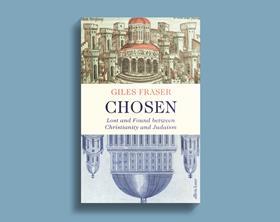


 Man & Time J B Priestley


